BMW Develops Electric Motors Without Rare Materials
Efficient Electric Motors Free from Rare Material Dependence
The electric vehicle revolution has sparked market forces leading to diverse innovations. Battery technology has rapidly advanced, and engineers have developed methods to charge vehicles at increasing speeds. Electric motors have also become more powerful and compact, offering better performance than ever. However, modern motors rely heavily on increasingly difficult-to-obtain materials, particularly rare minerals that are essential for their magnets.
These materials predominantly come from China, and complex trade policies make access to them both challenging and costly. As a result, engineers are determined to find alternative production methods for motors that do not require these rare materials.
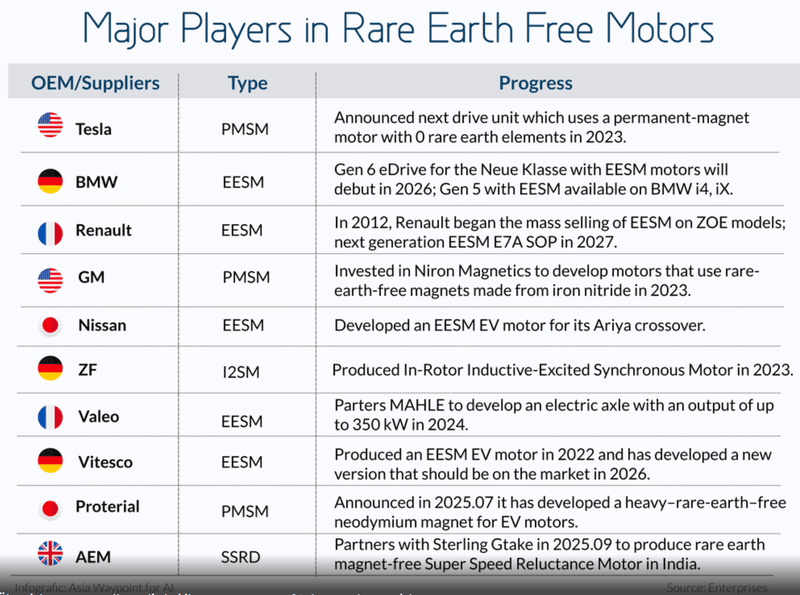
BMW has tackled this issue by developing different types of electric motors. Instead of trying to find ways to create strong magnets, the German company has invested in electric motors that generate their own magnetic fields using electricity. These motors, known as Electronically Excited Synchronous Motors (EESM), utilize electrified coils in the rotor, thereby eliminating the need for neodymium permanent magnets.
Although this solution presents challenges, such as the heat generated by the coils or the need for slip rings, BMW has managed to completely avoid rare materials. This innovation enables them to maintain a more stable supply chain, reducing the risk of unplanned production halts due to material shortages. Currently, EESM motors are featured in products such as the BMW iX1 and i7, with plans to implement them broadly in future electric models.
This shift is not unique; other manufacturers, such as Nissan, are also exploring EESM technology. However, transitioning to these motors will require time and effort to rearrange production lines and integrate the new motors into vehicle designs.