Putin Reaffirms Hardline Territorial Demands as US Delegation Prepares for Moscow Peace Talks
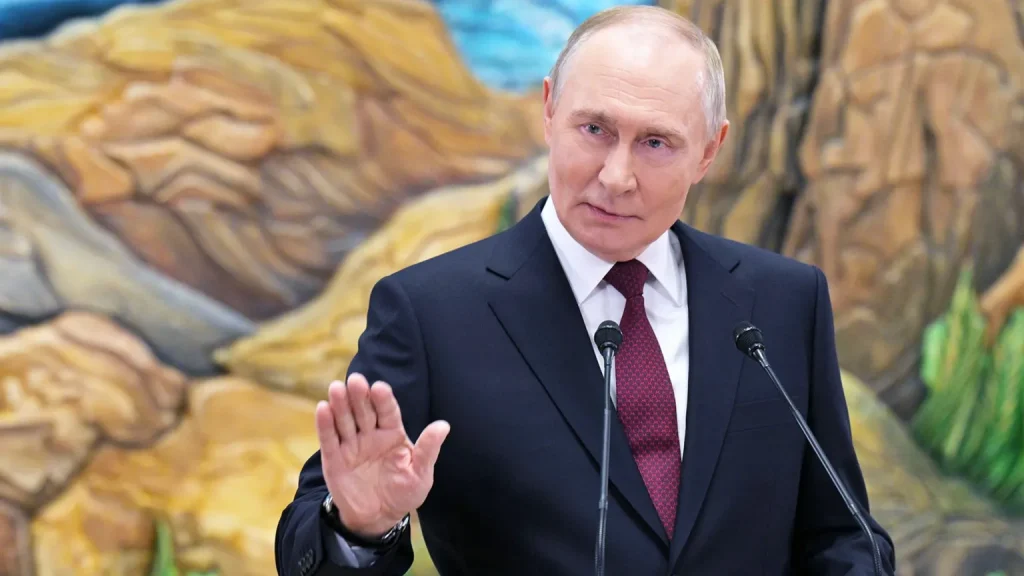
Russian President Vladimir Putin has once again reinforced his core preconditions for ending the war in Ukraine, declaring that Russia will cease hostilities only if Ukrainian forces withdraw completely from all territories claimed by Moscow. The remarks come at a critical moment, just ahead of planned diplomatic discussions between Washington and Moscow next week.
Russia’s Territorial Red Lines: Crimea and the Donbas
Putin made clear that Russia’s territorial demands remain unchanged. Moscow insists that any future peace agreement must acknowledge Russian control over:
-
Crimea, annexed in 2014;
-
the Donbas region, consisting of the Donetsk and Luhansk oblasts, where Russian forces currently hold significant territory.
For Ukraine — which has repeatedly stated that it will not surrender any of its land — these demands are entirely unacceptable. President Volodymyr Zelensky responded by saying that Russia “continues to disregard every genuine effort to end the war.”
Putin further argued that Russia possesses “the initiative on the battlefield” and reiterated that the war would end only when Kyiv’s forces withdraw.
“If they refuse, we will achieve this by force,” he told journalists during a visit to Kyrgyzstan.
Geneva Negotiations: A Draft Plan Under Heavy Revision
Last week saw accelerated diplomatic efforts involving the US, Ukraine, and European representatives in Geneva. The discussions revolved around a peace plan reportedly drafted by American and Russian negotiators months ago.
The updated version, revised substantially by the US and Ukraine, has now been shown to Moscow. However, sources say the plan does not address the future status of occupied territories, meaning the core disagreement remains unresolved.
Putin acknowledged that the draft “could serve as a basis” for negotiations but stressed the need for “precise diplomatic wording” and adjustments.
US Delegation Heading to Moscow: Kushner May Join the Talks
A US delegation led by special envoy Steve Witkoff is expected in Moscow early next week. US President Donald Trump suggested that his son-in-law Jared Kushner might join the mission, signaling the administration’s desire for direct engagement at the highest informal levels.
Zelensky announced in a video message that Ukrainian and US delegations will meet soon “to transform the Geneva principles into concrete agreements that lead us toward peace and real security guarantees.”
Ukraine’s chief of staff, Andriy Yermak, confirmed that US Army Secretary Dan Driscoll plans to visit Kyiv as part of the negotiations.
Putin Questions Zelensky’s Legitimacy
Putin also reiterated his claim that Ukraine’s leadership is “illegitimate” because the country has not held elections under martial law.
However, Ukraine’s parliament unanimously voted earlier this year to affirm Zelensky’s mandate for the duration of the war, in accordance with Ukrainian law.
The statement reflects Moscow’s long-standing position: if the leadership in Kyiv is not legitimate, any agreement signed with Ukraine is — în opinia Kremlinului — problematic.
Europe Warns Against Moscow’s Intentions
While the White House has adopted a cautiously optimistic tone regarding the potential for a diplomatic breakthrough, European officials remain skeptical.
European Commission President Ursula von der Leyen sharply condemned Russia’s geopolitical approach, accusing Moscow of clinging to “a post-World War Two mindset” in which European nations are treated as “spheres of influence” to be carved up.
A Diplomatic Path Filled with Obstacles
Despite recent diplomatic activity, the core issues remain unchanged:
-
Russia demands the withdrawal of Ukrainian forces from territories it occupies.
-
Ukraine refuses to legitimize territorial conquest.
As preparations continue for the upcoming talks in Moscow, the world watches closely — but skepticism persists. Is Putin genuinely seeking peace, or merely reshaping negotiations to favor his long-standing strategic aims?