Why America’s rich and powerful couldn’t say no to Jeffrey Epstein
Jeffrey Epstein’s name continues to haunt American politics, academia, and the financial world. Despite his 2008 conviction for soliciting prostitution from a minor and the damning 2018 Miami Herald investigation exposing his abuse network, Epstein managed to maintain — and even expand — a striking list of powerful associates. Newly unsealed documents, totaling over 20,000 pages, reveal the disturbing extent of his influence and shed new light on why elites remained connected to him.
The Plaskett incident: a symbol of his reach
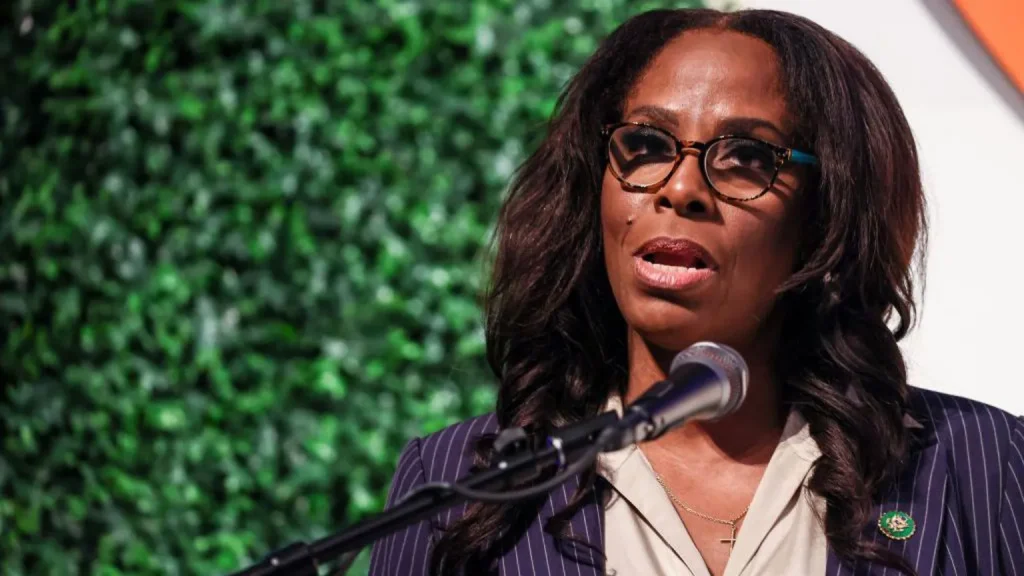
In 2019, during Michael Cohen’s congressional testimony, Representative Stacey Plaskett was caught texting Epstein in real time. Court documents show Epstein was advising her on what to ask. Although she denies taking guidance and insists she texted many people that day, the revelation shocked the public: even after his reputation was destroyed, Epstein still had access to political figures.
He had already served his first jail sentence. His private island had been named as a site of abuse by multiple survivors. And yet, lawmakers continued to engage with him.
The charisma, the network, the manipulation
Barry Levine, author of The Spider, describes Epstein as a “psychological strategist” who collected people the way others collect art. He networked with purpose — every relationship was instrumental. Powerful people were either dazzled by his wealth, intrigued by his connections, or dependent on his financial expertise.
He offered access: to scientists, CEOs, diplomats, presidents, world leaders. And for some, that access outweighed the moral concerns.
Epstein operated like a broker of influence — and many elites valued that more than they feared reputational risk.
Elites entangled: Peter Mandelson, Larry Summers, and others
Among the most criticized figures exposed in the documents is Lord Peter Mandelson. Emails from 2015 and 2016 illustrate a warm correspondence, despite Epstein’s criminal past. Mandelson now expresses regret and denies any awareness of Epstein’s crimes, but the association has cost him politically.
Larry Summers, former Harvard president, exchanged messages with Epstein even in late 2018. In one instance, he forwarded a romantic message from a woman and asked Epstein how he should respond. Epstein teased him: “She’s already sounding needy.”
Summers has now withdrawn from teaching and public positions, citing deep remorse.
Intellectual giants: Noam Chomsky and the academic elite
Noam Chomsky appears in the documents as one of Epstein’s financial clients. Epstein helped him move money between accounts, something Chomsky claimed was purely logistical: “Not one penny came from Epstein,” he insisted.
But the documents also include a letter in which Chomsky praises Epstein for their “long and in-depth discussions”. At 96, Chomsky maintains that after someone serves a sentence, “the slate is clean”. Critics argue this excuse is ethically unacceptable.
Other renowned scholars, mathematicians, and physicists also maintained contact with Epstein as he promoted himself as a patron of science. Many insist they had no knowledge of his abuse.
Those who walked away
Not everyone remained in Epstein’s orbit. Some recognized the danger early.
Howard Lutnick, now US secretary of commerce, recounts visiting Epstein’s residence once in 2005. When Epstein bragged about receiving daily massages and leaned in “creepily”, Lutnick and his wife excused themselves and never returned.
Donald Trump, once a close friend according to Epstein, cut ties in the early 2000s and later called Epstein a “creep”. The White House has said Trump banned him from Mar-a-Lago.
Why did so many stay?
The documents suggest several explanations:
-
Greed — Epstein managed billions for clients who valued his financial genius.
-
Access — He connected elites from politics, academia, tech, and finance.
-
Manipulation — He collected secrets and vulnerabilities, possibly for leverage.
-
Social immunity — As one New York socialite said: “The only unforgivable sin in high society is poverty.”
-
Denial — Some simply chose not to believe — or to ignore — the accusations.
Most disturbing is that Epstein retained influence even after the world knew enough to shun him.
An empire of power built on silence
Jeffrey Epstein was a predator — but he was also a mirror reflecting a troubling truth about American elites: money, access, and influence can outweigh morality. The documents continue to spark resignations, public scrutiny and shame. Yet they also underscore how deeply rooted power networks are, and how vulnerable society is when those networks protect abusers instead of victims.
Even after his death in 2019, Epstein’s reach continues to unravel reputations — proof that his grip on the elite was as strategic as it was sinister.