Exploring Nintendo 64DD Code Remnants in Ocarina of Time
An Abandoned Nintendo 64DD Project
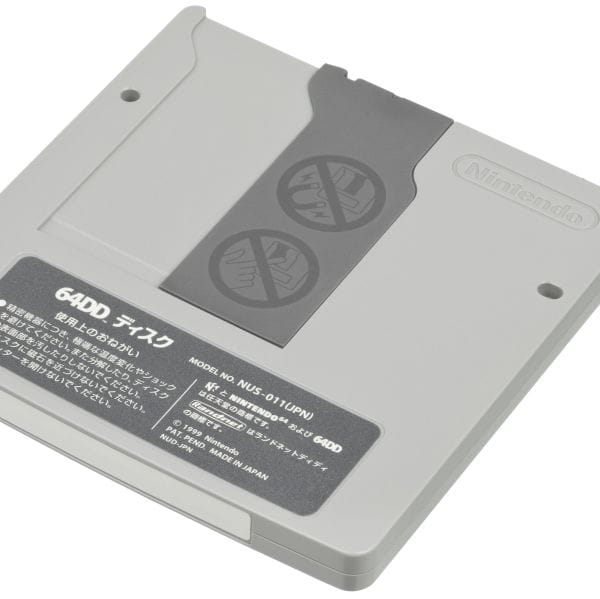
What would have happened if a Nintendo 64 game based on cartridges could also utilize a high-capacity magnetic disk format? This was the premise of the Nintendo 64DD peripheral, and a recent video by [Skawo] has performed an archaeological exploration of the code to see what remnants of this abandoned product might remain.
The 64DD connects to the base of the console, where the peripheral connector is located, allowing the system to read and write to 64DD magnetic disks. With a capacity of 64 MB, it was equivalent to a cartridge but writable, unlike cartridges or CDs. The project was inspired by earlier formats like the Famicom Disk System.
For the 1998 title, "The Legend of Zelda: Ocarina of Time," an expansion based on the 64DD was in development but was canceled along with the 64DD peripheral. Now, with this decompiled Zelda game, the source code has shown that it is filled with codes related to the 64DD, which [Skawo] explores in his video.
The Nintendo 64DD disks resembled ZIP disks. Typically, for CD and magnetic storage formats, access times and transfer speeds are extremely slow compared to a ROM cartridge, which left developers searching for a way to use the 64DD as a real enhancement.
Given that the 64DD was never released outside of Japan and had a very short life, it seems evident that, without compromises on the PlayStation level, disk formats were not suitable for the console. The interface with the 64DD in the game code gives insight into what developers had in mind, which largely consisted of changing resources on the cartridge, such as dungeon maps, with others.
Ultimately, this content made its way to a commercial release, in the form of the Master Quest option in the game's re-release on the GameCube. Although this does not activate features once anticipated, such as tracking the player's entire route and storing permanent map changes during gameplay, it still offers a glimpse into what the game's expansion on the 64DD could have been.