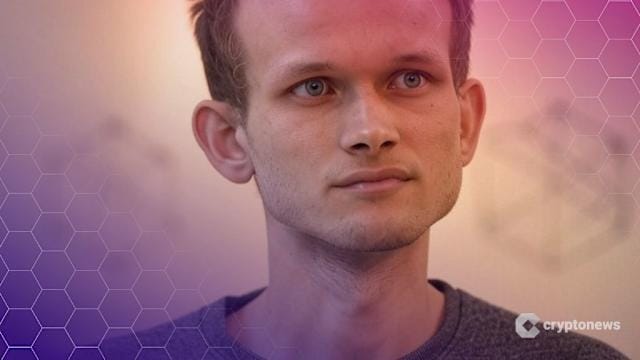
Vitalik Buterin Declares Ethereum Has Solved Blockchain Trilemma
Ethereum Achieves New Performance Level
Co-founder of Ethereum, Vitalik Buterin, has announced that the network has "solved" one of the biggest challenges in cryptocurrencies: the blockchain trilemma. In a recent post, Buterin highlighted the potential of Peer-to-Peer Data Availability Sampling (PeerDAS) and Zero-Knowledge Ethereum Virtual Machines (ZK-EVMs), stating that these upgrades are transforming Ethereum into a fundamentally new and more powerful decentralized network.
"Now, with PeerDAS (2025) and ZK-EVMs (expected to utilize small portions of the network by 2026), we have: decentralization, consensus, and high bandwidth," explained Buterin. He added that the trilemma has been solved "not on paper, but with functioning code, of which half (data availability sampling) is *on mainnet today*, and the other half (ZK-EVMs) is *production-quality today*—security is what remains."
PeerDAS is a scalability improvement introduced in the Fusaka upgrade in December, allowing Ethereum to manage significantly larger amounts of data. Simultaneously, ZK-EVMs are virtual machines compatible with both ZK proofs and the existing Ethereum virtual machine. Buterin noted that ZK-EVMs are still in their "alpha" stage, being performance-ready but requiring further security enhancements.
He provided a four-year timeline for ZK-EVMs to be fully utilized and operated within Ethereum. Once this is achieved, Buterin says the vision of solving the trilemma will officially be realized. "In the next ~4 years, expect to see the full scope of this vision unfold: *In 2026, significant increases in gas limits that do not depend on ZK-EVM due to BAL and ePBS, and we will have the first opportunities to run a ZK-EVM node*,” he stated. He then detailed other key milestones for 2026-2028 and 2027-2030.
Buterin emphasized that it took a decade of continuous work to bring Ethereum to the point where it could solve the trilemma, recalling his first post on data availability issues from April 2017. "It has been a 10-year journey [...] but it has finally arrived," he concluded. The blockchain trilemma refers to the complexity of building a blockchain network that achieves sufficient decentralization, security, and scalability simultaneously, without any component hindering the others. Most blockchains are typically forced to prioritize one or two of these components in their early stages while gradually working to achieve a balance among all three.