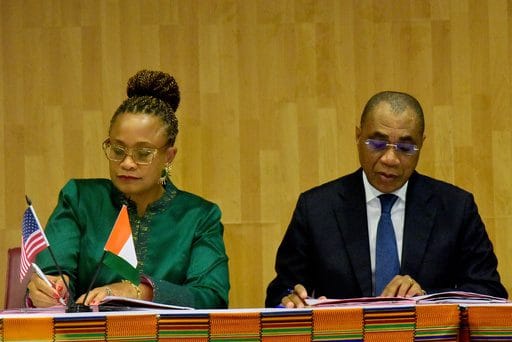
United States and Ivory Coast Sign $480 Million Health Assistance Agreement
A New Health Assistance Agreement
The administration of U.S. President Donald Trump has signed an agreement committing to allocate $480 million for public health assistance in the Ivory Coast. The agreement was signed in the capital city of this West African nation, Abidjan, and represents the latest step in the "America First" Global Health Strategy.
This initiative aims to establish bilateral agreements with dozens of countries to receive health assistance from the United States, in the context of reduced funding provided through the U.S. Agency for International Development (USAID). The Trump administration argues that foreign aid policies have been inefficient and wasteful, stating that these bilateral agreements will create greater accountability, oversight, and long-term self-sufficiency.
At the signing ceremony, U.S. Ambassador to the Ivory Coast, Jessica Davis Ba, stated that the American government is moving "beyond the traditional approach to aid, toward a model based on trade, innovation, and shared prosperity." The initial outcomes of this agreement will include a commitment from the Ivory Coast to contribute up to $292 million for health funding by 2030, announced Ivorian Prime Minister Robert Beugre Mambe.
This agreement is the largest among over a dozen arrangements that the Trump administration has completed under its new aid model. Significant cuts in USAID funding, implemented earlier this year, have severely impacted public health services globally, with Africa being particularly affected. Concerns exist that these cuts could lead to an increase in the spread of HIV on the continent, declines in maternal and child care, rises in malaria cases, and decreased early detection of new infectious diseases.
In contrast to these concerns, public health experts have warned about the administration's approach. An analysis conducted by the Center for Global Development highlighted the major risks associated with this strategy, noting that public health priorities could be influenced by transactional pressures, questions related to oversight, and a lack of clarity regarding how services will be protected if a partner country fails to meet its commitments.