Russia Deploys Oreshnik Hypersonic Missiles in Belarus Amid European Tensions
Russia Initiates Deployment of Oreshnik Missile System in Belarus
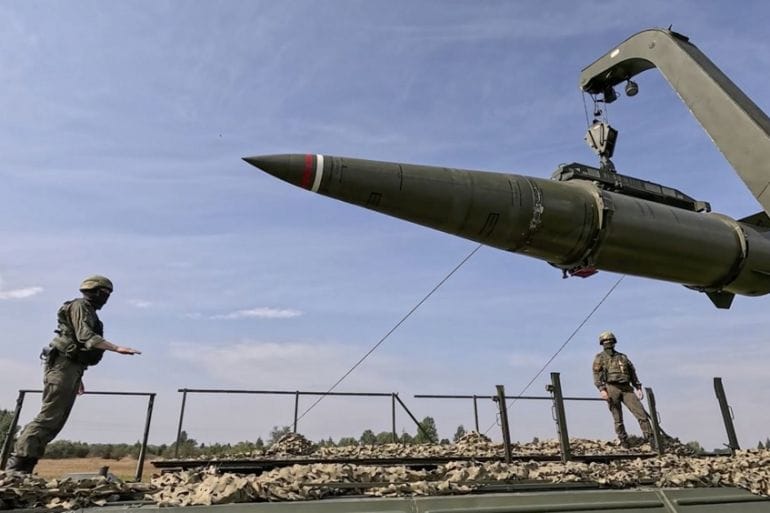
Russia has released images showcasing the deployment of its Oreshnik hypersonic missile system in Belarus, a maneuver that could enhance Moscow's ability to target Europe in future conflicts. The Russian state news agency TASS reported that this marks the first public presentation of the mobile Oreshnik systems.
President Vladimir Putin described these missiles as interceptable, claiming speeds that exceed ten times the speed of sound. In his New Year's message, Russia's Ambassador to Belarus, Boris Gryzlov, confirmed the deployment of the missiles, highlighting the effectiveness of the bilateral security guarantee treaty between the two nations.
The deployment of missiles near NATO member states and Ukraine occurs amidst tensions stemming from the conflict in Ukraine. Russian Foreign Minister Sergey Lavrov recently accused Ukraine of launching an attack on Putin's residence, threatening retaliation. Ukrainian President Volodymyr Zelenskyy dismissed these allegations.
Experts emphasize that the positioning of Oreshnik missiles in Belarus could shorten the time it takes for Russian nuclear weapons to reach European targets, a strategy that underscores Moscow's reliance on nuclear deterrence to diminish NATO's support for Ukraine.
For instance, a recent video has confirmed previous satellite identification of the Krichev-6 airbase as likely being the deployment location for the missiles.
Although the images did not reveal the exact location, mobile launchers were observed navigating forest roads, teams camouflaging the systems, and a high-ranking Russian officer announcing that the missiles are officially in active service. Training and reconnaissance routines were also noted as light snowfall blanketed the landscape.
Analyzing the missile capabilities, with an estimated range of 5,500 km, the system could theoretically strike targets across Europe or even in the western part of the United States. However, some Western officials believe that the missiles' impact on the battlefield may not be decisive.
In his New Year's address, German Chancellor Friedrich Merz touched upon Moscow's military posture, stating that Russia's aggression is part of a plan targeting all of Europe. Merz underscored the need for Europe to defend its own interests, given the deteriorating uncertainty in relations with the U.S.