Trump's Gaza Peace Plan Faces Significant Challenges in Second Phase
The Peace Plan and Its Challenges
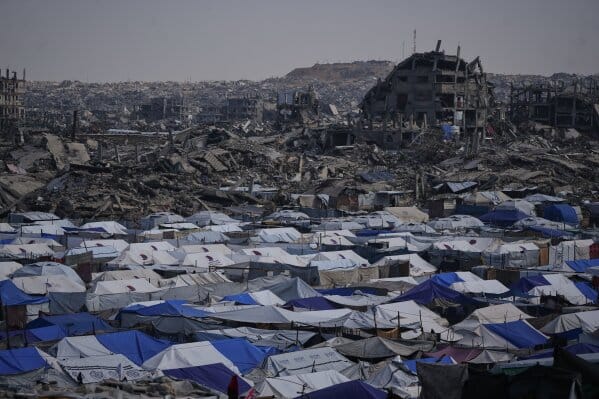
Gaza remains devastated after two years of war. At first glance, the announcement of the second phase of President Donald Trump's peace plan for Gaza might seem like progress. However, there is a significant lack of clarity and details regarding the future of the region and its 2.1 million Palestinian residents. Moreover, numerous pitfalls lie ahead.
To begin with, Trump's plan requires Hamas, along with other groups in Gaza, to agree to disarmament. Announcing the second phase of the agreement, U.S. special envoy to the Middle East, Steve Witkoff, stated that failure to meet this requirement would have "serious consequences." Nevertheless, Hamas has vehemently refused to surrender its weapons, viewing them as tools of resistance against Israel's decades-long military occupation. If this stance persists, far-right members of Prime Minister Benjamin Netanyahu's coalition government are eager to resume war and "finish the job."
Although Hamas has been considered militarily weakened, U.S. intelligence reports suggest that the group has managed to recruit more new members in Gaza than it has lost during the war. The ceasefire, which has been in effect since October of last year, is already fragile. Both sides have accused each other of repeated violations. Over 450 Palestinians have been killed in Israeli attacks since the ceasefire went into effect, according to the Hamas-run health ministry in Gaza. The Israeli military reported that three of its soldiers were killed in attacks by Palestinian armed groups during the same period.
Secondly, there is no clarity regarding how much Israel will be required to withdraw its forces from Gaza. It has not indicated any willingness to withdraw completely, insisting that a strong military presence must be maintained in the area. Israeli officials are discussing "a new reality" in Gaza, arguing that the area will never return to its pre-Hamas attack state from October 7, 2023.
There is also a governance issue. Who will lead Gaza if not Hamas, which has been in power since winning the Palestinian elections nearly 20 years ago? Who will ensure police, security, schools, and hospitals? For over a year, there has been a notion that an international stabilization force could provide security in Gaza. Countries such as Egypt, Turkey, the United Arab Emirates, Qatar, and Saudi Arabia, as well as the Palestinian Authority from the West Bank, have been suggested as potential contributors to this force. However, none have committed, and once again, details remain unclear. Anyone perceived as "coming on the backs of Israeli tanks" will likely face a cold reception from Palestinians in Gaza.
According to Trump's peace plan, Gaza will have three levels of governance. At the lowest level, the region will be led by a new technocratic government composed of civil society figures from Gaza. The names of its members were announced on Wednesday, with Hamas agreeing to have no role in the government. Above this, there will be an Executive Committee based outside Gaza to oversee the activities of the new government. It is expected to consist of non-Palestinians, with former British Prime Minister Tony Blair among those slated to be part of this committee. Blair is viewed with suspicion by Palestinians, seen as too close to Israel and implicated in the 2003 Iraq War alongside former U.S. President George W. Bush.
Finally, above the Executive Committee will be a Peace Council, with Trump as president. Current British Prime Minister Keir Starmer, Italian leader Giorgia Meloni, and Turkish President Recep Tayyip Erdogan are also under discussion to be part of this council. Many Palestinians believe the presence of foreign leaders effectively governing Gaza is a sign of colonialism. The question remains: do they have a choice?
On the other hand, the humanitarian situation in Gaza remains extremely dire. Since the ceasefire was announced in October last year, more assistance has been allowed into the area, but aid agencies claim it is still far from sufficient. Tens of thousands of Palestinians remain homeless, living in makeshift tents. The last few months in the region brought harsh winter weather, with torrential rains, strong winds, and temperatures below 5 degrees Celsius. Gaza has experienced severe flooding, with buildings collapsing and tents scattered. Most children have not had any education for over two years. What future awaits them?
Therefore, while the second phase of the peace plan might seem like a step forward, there are many reasons for pessimism.