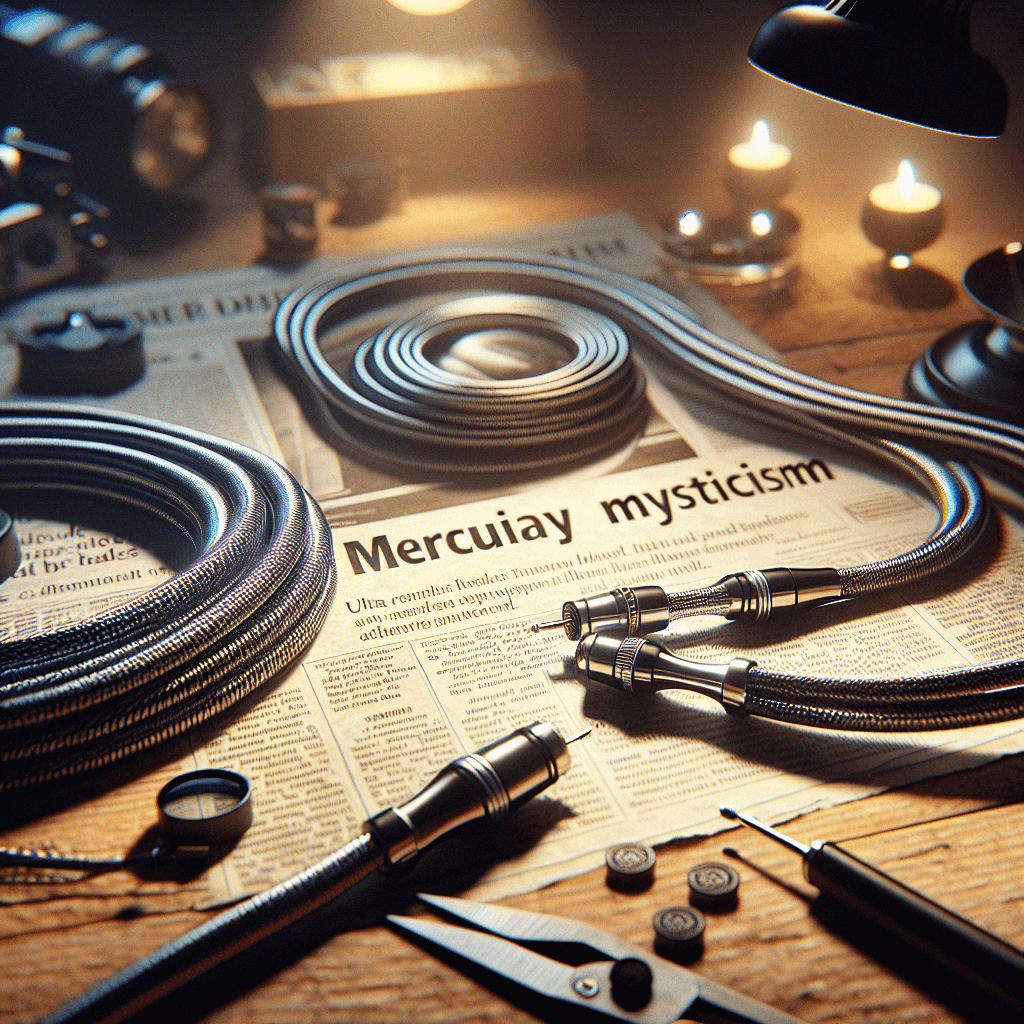
Mercurial Mysticism: An Examination of Mercury Audio Cables
Audiophiles and the Fascination with Unconventional Materials
The audiophile sector, driven by a relentless pursuit of sonic perfection, has spawned a plethora of innovations often met with skepticism from the broader public. A recent extravagant invention from [Pierogi Engineering] features a set of interconnect cables filled with mercury. Housed within transparent tubes, these cables have captured the attention of both audiophiles and safety experts alike. While the promise of enhanced sound quality through the utilization of mercury is provocative, a fundamental question persists: is it genuinely effective?
The Sonorous Potential of Mercury
Audio signal transmission through cables fundamentally relies on the transfer of electrical signals, with the materials used in these cables playing a pivotal role. Copper cables dominate the market due to their excellent conductivity and affordability. Although mercury serves as an electrical conductor, its application in a domestic context raises concerns not only about auditory prowess but also regarding safety. Experimental findings indicate that differences in sound quality are rarely discernible to the human ear, thus casting doubt on the efficacy of such cables, especially in light of the health risks involved.
The Safety Dilemma: Balancing Innovation and Caution
The employment of mercury, a toxic element, poses significant concerns among health professionals. Despite [Pierogi Engineering]'s claims of triple-distilled mercury with reduced risks, experts emphasize that the handling of mercury should be strictly avoided. From vapor formation to potential environmental contamination, the risks are considerable. Moreover, the apparent lack of updated safety directives and clear handling instructions renders the use of these products at least questionable.
Impact on the Audiophile Community
The audiophile community finds itself divided. Many enthusiasts are eager to experiment with any innovation that enters the market; however, skepticism reigns supreme. There exists a persistent tendency to ridicule extremes, with mercury cables fitting neatly into this category. Jokes deriding the concept of such cables and remarks suggesting they are more suited for a heavy metal concert than a refined listening session illustrate the community's rejection of what is perceived as excessively advantageous yet unconventional.
Comparative Analysis with Traditional Alternatives
When juxtaposing mercury cables with traditional copper variants, it is noteworthy that the majority of audiophiles fail to discern a significant difference in sound quality between signals transmitted through mercury cables and those through copper. Additionally, sound evaluations conducted with high-end equipment reveal that the ultimate outcome is influenced more by the quality of the audio source and playback equipment than by the cable material itself. This observation ignites a discussion regarding exaggerated marketing and the human inclination to continuously seek the "holy grail" of audiophilia.
Responsibility in Innovation
In a realm characterized by technological innovation, it is imperative for engineers to operate responsibly. Industrial safety protocols, handling regulations, and environmental protection should never be overlooked. Regardless of the experimental nature of a product, the safety of users and the surrounding environment should remain priorities. Regrettably, the narrative surrounding mercury audio cables exemplifies a disregard for these fundamental principles.
Striving for a Balance Between Innovation and Responsibility
The origins of mercury cables are intimately tied to the DIY community, which often pushes the boundaries of technology. Innovations within this realm have resulted in some of the most captivating audio experiences. Nevertheless, it is crucial for such innovations to be executed skillfully, considering not only sonic performance but also the implications for public health and the environment.
The Warhial Perspective
In an era characterized by rapid technological advancement, it is essential for all participants in the tech creation process to assume responsibility. Projects involving hazardous materials, such as mercury, necessitate meticulous risk assessment and total transparency regarding handling procedures. Ultimately, audiophiles should not have to choose between innovation and safety; they deserve both without compromising environmental integrity and personal health for an enhanced auditory experience. This narrative also serves as a lesson about the limitations of innovation and the significance of ethics in technology. In short, we must ask ourselves: do we truly need to engage with mercury to achieve better sound?