Marco Rubio Visits India: Energy Security and Complex Trade Deals Dominate US-Delhi Agenda
United States Secretary of State Marco Rubio is currently on a critical four-day official visit to India, a diplomatic mission aimed at reshaping the strategic and economic partnership between the two nations. The extensive tour, which includes stops in Kolkata, New Delhi, Jaipur, and Agra, featured high-level talks with Indian Prime Minister Narendra Modi. Against the backdrop of a global energy crisis triggered by the ongoing Iran conflict, discussions focused heavily on economic recalibration, geopolitical stability, and a formal invitation for the Indian premier to visit the White House.
The Global Energy Crisis and the Strait of Hormuz
Energy security emerged as the most pressing topic of the bilateral talks. The escalating tensions between Israel, the US, and Iran have turned the Strait of Hormuz into a geopolitical flashpoint. Iran has effectively closed this vital maritime chokepoint—through which roughly 20% of the world's oil and natural gas flows—using it as a high-stakes pressure tactic in fragile peace negotiations with Washington.
This blockade has severely impacted India's economy. The South Asian giant imports over 80% of its energy requirements, and nearly half of its crude oil imports traditionally pass through the Strait of Hormuz.
-
The US Stance: Marco Rubio emphasized that the United States will not allow Iran to hold the global energy market hostage. American officials reiterated that US energy products hold immense potential to diversify India's supply chain.
-
Logistical Hurdles: While the US has expressed eagerness to sell India "as much energy as they'll buy," trade analysts point out that substituting Middle Eastern oil with US imports is a complex and highly expensive logistical challenge due to the vastly longer shipping routes.
"Energy security is going to be the key theme of this visit because the Iran situation is not going to be resolved anytime soon," explained Vineet Prakash, associate professor of US studies at Delhi's Jawaharlal Nehru University.
Trade Deficits, Tariffs, and Billion-Dollar Commitments
Beyond energy, trade relations remain a sensitive friction point. The US goods trade deficit with India hit $58.2 billion in 2025, marking a 27.1% increase from the previous year—a statistic that has frequently irked President Donald Trump. However, bilateral tensions have eased significantly following reciprocal tariff reductions. After a 10-month standoff, the US lowered tariffs on Indian goods from 50% to 18%, and further to 10% following a US Supreme Court ruling.
This relief for Indian exporters came on the heels of a massive commitment: an interim trade agreement in February where India pledged to purchase $500 billion worth of American goods, including energy, technology, aircraft, and agricultural products.
Despite these sweeping announcements, trade experts remain circumspect. While India's exports to the US continue to thrive—shipping $8.5 billion worth of goods in April alone—tangible Indian investments in the US are lagging. For instance, Indian billionaire Mukesh Ambani has remained notably silent regarding Trump's premature announcement of a $300 billion Texas oil refinery backed by Reliance Industries.
Simultaneously, India has been fast-tracking Free Trade Agreements (FTAs) with the UK, EU, and Australia, strategically liberalizing its traditionally protectionist economy while fiercely guarding sensitive domestic sectors like agriculture and dairy.
Geopolitical Tensions and the Pakistan Factor
The US-India relationship is also navigating complex regional geopolitics. Washington and Delhi remain at odds over Trump's persistent claims that he brokered peace during last year's India-Pakistan conflict. India vehemently denies this, maintaining its strict policy against third-party mediation in South Asian disputes.
Adding to the unease is Trump's public affinity for Pakistani army chief Asim Munir and Pakistan's active role in mediating between the US and Iran, which has brought Islamabad and Washington closer. While Rubio is expected to keep discussions regarding Pakistan strictly behind closed doors, this dynamic heavily influences the diplomatic subtext of the trip.
The Future of the Quad and the Upcoming BRICS Summit
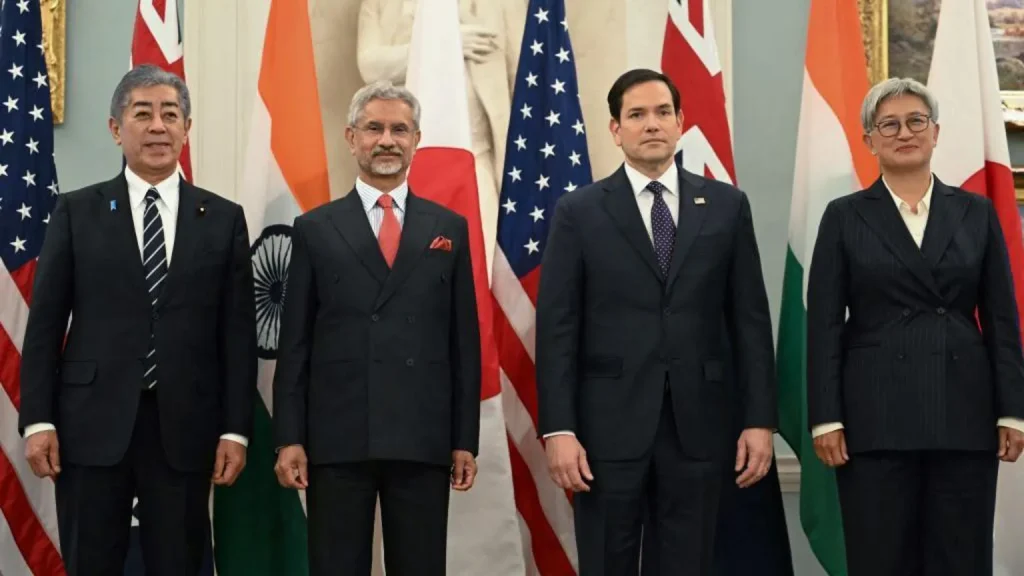
The final crucial element of Rubio's agenda is the future of the Quad—the strategic security dialogue between the US, India, Japan, and Australia. On May 26, Rubio will attend a Quad foreign ministers' meeting in Delhi.
During his first term, Trump championed the Quad as a vital bulwark against China's dominance in the Indo-Pacific. However, recent lukewarm responses from the US administration have led some geopolitical analysts to suggest the grouping is on "life support." Delhi will closely assess Rubio's tone regarding the Quad to gauge genuine American commitment.
This assessment is especially critical as India prepares to host a massive BRICS summit in September. India's delicate balancing act between Western alliances and its role within BRICS will be a defining factor in global geopolitics in the coming years.
Source: BBC