Doctors Describe Overwhelmed Hospitals Amid Ongoing Protests in Iran
Protests in Iran Continue to Cause Chaos in Hospitals
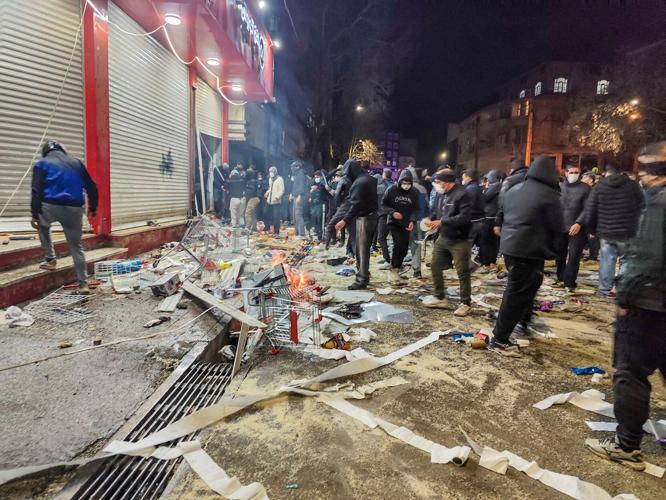
Staff at three hospitals in Iran have reported to the BBC that their facilities are inundated with dead and injured patients as major anti-government protests persist. A doctor from a hospital in Tehran stated that there have been "direct shots to the heads of young individuals, as well as to the heart," while another doctor revealed that an eye hospital in the capital had gone into crisis mode. Two healthcare workers who spoke with the BBC mentioned that they treated injuries from both types of bullets: live ammunition and rubber bullets. On Friday, the U.S. reiterated that the killing of protesters would be met with a military response. Iran has blamed the U.S. for turning peaceful protests into what it calls "violent subversive acts and widespread vandalism."
The protests began two weeks ago in the capital Tehran in response to economic hardships and have spread to over 100 cities and towns across all provinces of Iran. Hundreds of protesters are believed to have been killed or injured, with many others detained. BBC Persian has confirmed the identities of 26 individuals, including six children. Members of the security forces have also been killed, with a rights group estimating that at least 14 have died. BBC Persian verified that 70 corpses were brought to Poursina Hospital in the city of Rasht on Friday night. The morgue was so full that bodies had to be taken elsewhere. Authorities have demanded that the relatives of the deceased pay 7 billion rials (approximately £5,222 or $7,000) for their release for burial.
A hospital worker in Tehran described "very horrifying scenes," stating that there were so many injured that the staff had no time to perform resuscitation maneuvers. "Nearly 38 people died. Many of them upon arrival in the emergency beds... direct shots to the heads of young individuals, as well as to the heart. Many of them never made it to the hospital. The number was so large that there was not enough space in the morgue; bodies were stacked on top of each other. After the morgue was full, they were piled into the prayer room," she said.
A doctor contacted by the BBC via a Starlink satellite connection reported that the main specialty center for eyes in Tehran, Farabi Hospital, has gone into crisis mode, with emergency services overwhelmed. Non-urgent admissions and surgeries have been suspended, and staff has been called in to handle emergency cases. Iranian security forces often use rubber bullet cartridges in confrontations with protesters.
The protests have become the most extensive since a revolt in 2022, triggered by the death of Mahsa Amini in the custody of the morality police after she was arrested for not wearing the proper hijab. More than 550 individuals have been killed and 20,000 people detained, according to human rights groups.