Measuring Caffeine Content at Home
The Most Widely Used Psychoactive Substance
By far, the most widely used psychoactive substance in the world is caffeine. It is cultivated globally, most commonly found in coffee, tea, and cacao plants. However, it can also be found in less common plants, such as yaupon holly in the southeastern United States and yerba maté holly in South America.
A Solution for Measuring Caffeine
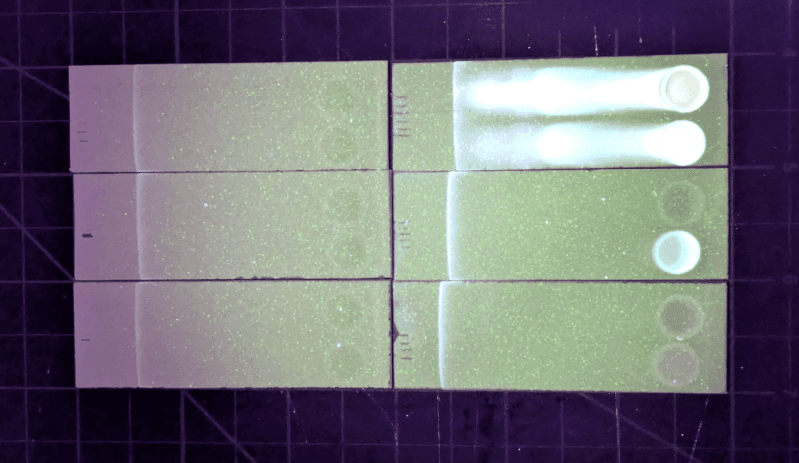
Despite its commonality and the long history of human consumption, quantifying the exact caffeine content in beverages has always been somewhat complicated. However, Johnowhitaker has found a solution. This method utilizes a technique called thin-layer chromatography, which separates the components of a mixture by allowing them to move at different speeds on a thin adsorbent layer using a solvent.
The Method Used
In this case, the solvent used is ethyl acetate. When samples from various beverages are exposed to a thin strip, caffeine moves to a predictable location, appearing as a dark spot under UV light. The dimensions of the spot can be accurately measured to indicate the amount of caffeine and can be compared to known reference samples.
The Advantages of the Method
Although carrying out this method requires some specialized compounds and equipment, it is by far a simpler and less costly way to determine the caffeine content in a product compared to more complex methods, such as high-performance liquid chromatography or gas chromatography, which may require extremely expensive setups.
Johnowhitaker is quite confident in his experimental results regarding beverages that do not provide this information directly, having outcomes that align with pure samples and reported quantities in various drinks.