The Transnistrian Oligarchs' Gambit: How Viktor Gushan Dodges Ukrainian Sanctions Amidst Intelligence Warnings of a New Hybrid Front
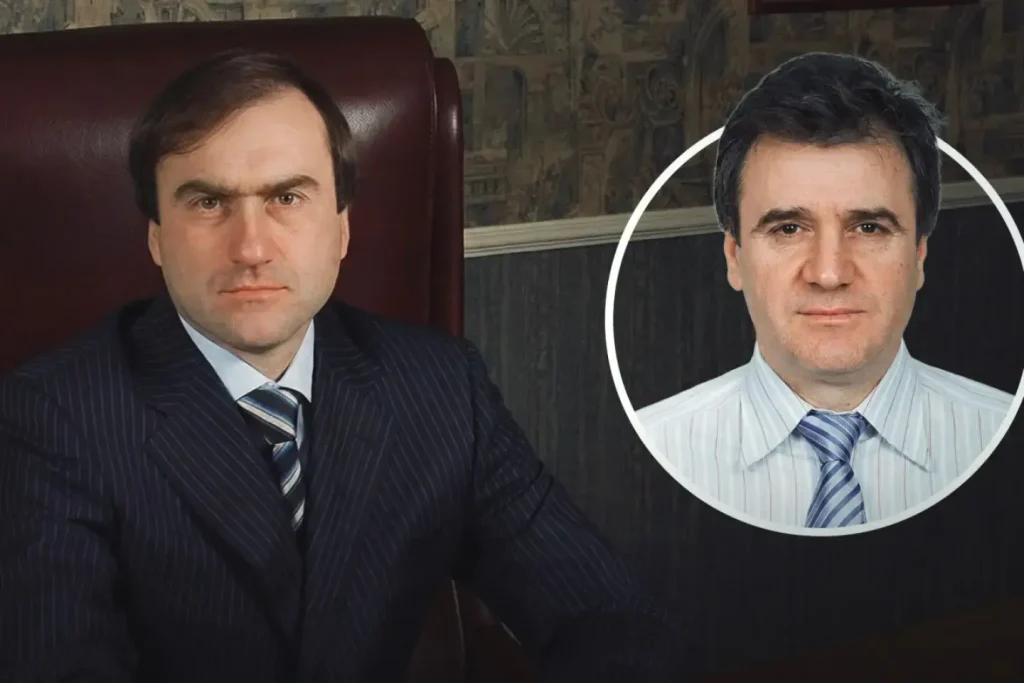
The war in Ukraine continues to reshape not only the front lines but also the obscure economic networks that have sustained separatist regimes in the post-Soviet space for decades. At the center of this web is Viktor Gushan, the all-powerful Transnistrian oligarch and de facto leader of the "Sheriff" holding company, which dominates the breakaway region on the left bank of the Dniester. A recent investigation has revealed how his financial empire is attempting to survive sanctions imposed by Kyiv through a combination of legal litigation and shareholder engineering, all against the backdrop of alarming warnings from Ukrainian intelligence services.
A Cat-and-Mouse Game with Ukrainian Justice
Since April 2022, shortly after Russia's full-scale invasion, authorities in Kyiv have scrutinized Gushan's businesses within Ukraine. The motivation was strategic: suspected links between Sheriff holding companies, particularly the "Moldavizolit" plant, and Russia's military-industrial complex. Ukrainian prosecutors alleged that components produced in Transnistria were fueling the Kremlin's war machine.
Consequently, in September 2022, courts in Kyiv ordered the seizure of Gushan's assets on Ukrainian territory. These included firms in the Odessa region (Vylkove city), such as "EKOFORTPOST" and "AKVA TV," specializing in fisheries and food trade, as well as a much more valuable asset: the telecommunications company "First Investment Union." The freezing orders prohibited any changes to the shareholding structure or the alienation of assets.
However, the oligarch did not remain passive. In a surprise move on January 21, 2025, Gushan's lawyers succeeded in convincing Ukrainian magistrates to partially lift the bans on the telecommunications firm. The main argument was that neither Gushan nor the company's employees officially held the status of suspects in the criminal case opened in 2022. Immediately after securing this tactical victory, Gushan resorted to a classic asset-protection maneuver: he transferred his stake to his lifelong business partner, Ilya Kazmaly.
Kazmaly, a co-founder of the Sheriff empire, took control through a Cyprus-based offshore vehicle, "LLC GAYMERSY LIMITED." This move is far from coincidental. Kazmaly and Gushan jointly control "Interdnestrcom," the telecom monopolist in Transnistria, and the new financial arrangements suggest an attempt to secure assets in Ukraine under a name less directly exposed to immediate sanctions—although Kazmaly's companies (such as "INTERTELECOM") have also been in the SBU's crosshairs in the past for alleged ties to Russian services.
HUR Warnings: Drones, Sabotage, and Gas Blackmail
While oligarch lawyers fight in courtrooms, the security situation on the ground is deteriorating. The Defense Intelligence of Ukraine (HUR) has recently issued severe warnings regarding Russia's activities in the Transnistrian region. According to Kyiv's espionage agency, Moscow is transforming the separatist enclave into a logistical base for hybrid warfare.
Reports indicate the establishment of drone production centers and operator training facilities right on the left bank of the Dniester. The Kremlin's objective appears twofold: opening a new axis of pressure on southern Ukraine (the Odessa region) and deeply destabilizing the Republic of Moldova. Special agents have reportedly been deployed to the region to coordinate sabotage groups and psychological operations, designed to sow chaos and justify potential military escalation.
The economic stakes of these tensions are enormous: gas. After Ukraine halted the transit of Russian gas on December 31, 2024, Transnistria found itself in a critical situation. Starting in February 2025, the region has been forced to survive on gas purchased from the European market—an expensive endeavor that erodes Tiraspol's parasitic economic model, which relied on free energy from Gazprom. HUR analysts argue that the saber-rattling and border provocations aim to blackmail Kyiv into resuming gas transit, which is vital for the survival of the separatist regime and the Sheriff holding's businesses.
Although Chisinau's Deputy Prime Minister for Reintegration, Valeriu Chiveri, cautiously stated that there are no independent confirmations of these military activities, the context remains volatile. With a thousand Russian soldiers guarding the Cobasna ammunition depot and another 400 in the peacekeeping forces, Transnistria remains a "powder keg" that local oligarchs are trying to manage to save their fortunes, while Moscow uses it as a geopolitical lever.