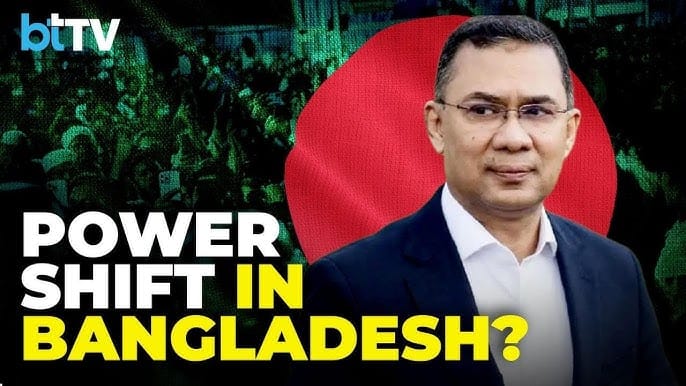
Tarique Rahman Returns to Bangladesh, Signaling Political Shift
Tarique Rahman, Heir of the Bangladesh Nationalist Party, Returns Home
On Christmas Day this year, Tarique Rahman—viewed by many as the future Prime Minister of Bangladesh—returned home, stepping directly into a power vacuum that has continuously widened since the collapse of the Awami League government in August 2024. After 17 years in exile, his symbolic act of touching Bangladeshi soil has major structural consequences. The country now finds itself in a precarious situation, and his return marks the end of a post-revolutionary period.
The Death of Khaleda Zia: An Inevitable Transition
On December 30, former Prime Minister and wife of the BNP founder, Khaleda Zia, passed away after a prolonged illness, bringing an end to the last living link with the party's original leadership generation. Consequently, Rahman now becomes the leader of the BNP, which is gearing up for the elections scheduled on February 12.
Challenges Amidst a Changing Generation
The Bangladesh that Rahman left in 2008 was fractured, and the one he returns to now is structurally compromised. Sheikh Hasina's hasty departure to India following a revolt against her has left behind a devastated bureaucracy and a destroyed social contract. In this volatile climate, Rahman’s presence acts as a high-voltage conductor for the BNP, providing a focal point for an opposition that has been systematically suppressed.
Balancing Dynastic Connection and Political Accountability
While for some, Rahman symbolizes a new beginning, he is, in fact, a product of the system he aspires to lead. As the son of two former leaders, he carries the weight of a legacy intertwined with patronage networks that affect governance in Bangladesh. This duality is a source of tension and uncertainty.
Future Perspectives and Foreign Policy
If Rahman ascends to power, there will be imminent pressure for reforms in the justice system and the Electoral Commission. Furthermore, foreign policy, particularly relations with India, will require recalibration. Heightened tensions in that area could further destabilize the region.
Conclusion of an Era?
Rahman's return represents not only a challenge for Bangladesh but also for the concept of democratic choice in the Indian subcontinent. It is an opportunity to rebuild institutions or, conversely, to revert to past habits. It remains to be seen whether Bangladesh will succeed in breaking the cycle of exile and revenge.