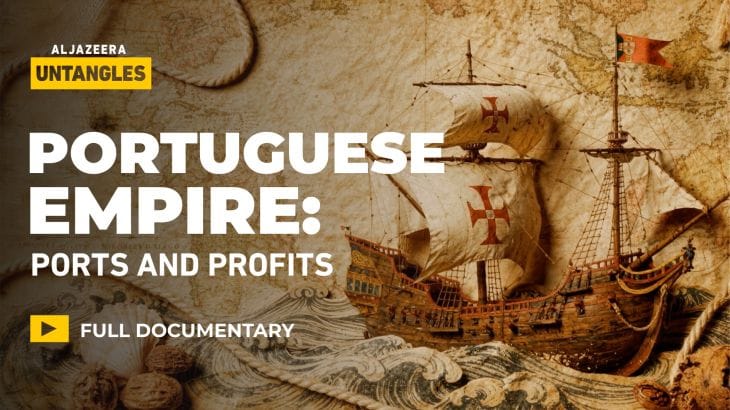
Portugal's Empire: Ports and Profits Drive Modern Inequities
Portugal's Global Trade Empire
The Portuguese Empire was built through ports, trade routes, and slavery. Control of fortified ports enabled Portugal to dominate maritime trade in Africa, Brazil, and Asia, creating an empire based on movement rather than territory. Faith played a central role in legitimizing its expansion, with missionaries accompanying merchants and military forces.
The ports enforced systems of slavery and forced labor, linking religious authority to economic extraction. Slavery became central to imperial wealth, connecting African labor to plantations and markets across the Atlantic. By integrating slavery into global trade networks, the Portuguese Empire played a fundamental role in shaping modern economic systems, racial hierarchies, and patterns of inequality that persist today.
The control once exerted through ports and maritime routes now manifests through digital infrastructures, such as submarine cables and data centers, as Portugal becomes an important hub connecting Europe, Africa, and the Americas. Former colonies like Mozambique remain influenced by extractive economic structures rooted in colonial rule, while Lisbon faces increasing pressures from mass tourism and foreign real estate investments, leading to displacement and rising housing costs for local residents.
From maritime trade to data flows, the Portuguese model of power—built on controlling circulation rather than territory—continues to influence patterns of inequality in the modern world.