United Nations Security Council Divided Over Venezuela Crisis
United Nations Security Council in Debate
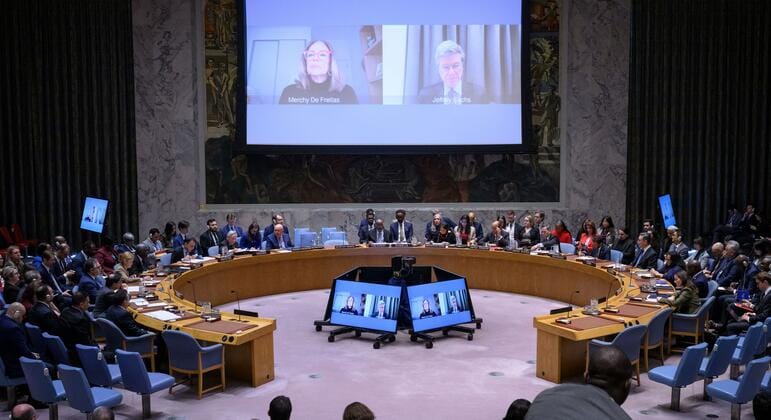
The United Nations Security Council convened on Monday amidst a dramatically altered diplomatic landscape, following the United States' attacks on the Venezuelan capital and the capture of President Nicolás Maduro. Council members are split over whether Washington's actions represent accountability or undermine a fundamental principle of the international order.
Some officials argue that the actions were exceptional and justified; others warn that they risk normalizing unilateral force and eroding state sovereignty. The UN Secretary-General emphasized that international peace and security depend on all Member States adhering to the UN Charter - a message highlighted in the debate that showcased deep divisions within the chamber in New York, even as the Venezuelan leader appeared in a federal courtroom just a few miles away.
United States' Position
U.S. Ambassador Michael Waltz dismissed characterizations of the operations as military aggression. He described the action as a targeted law enforcement measure, facilitated by the military, to capture a fugitive. According to him, "Nicolás Maduro is no longer a legitimate leader, and Saturday's operation was necessary to combat drug trafficking and transnational organized crime that threaten American and regional security."
Venezuela's Reaction
Venezuelan Ambassador Samuel Moncada characterized the attack on his country as illegitimate military aggression, accusing the United States of bombings on Venezuelan territory and the "kidnapping" of President Maduro and First Lady Cilia Flores. Moncada urged the Council to act in defense of the president's and his wife's immunity while ensuring the withdrawal of forces.
International Concerns
Several regional states, including Colombia, Brazil, and Mexico, have expressed deep concern regarding U.S. military actions, emphasizing that these pose a risk of destabilizing the Western Hemisphere. While some countries, such as Argentina, have supported U.S. actions, others, including Russia and China, have condemned these operations as military aggression.
The confrontation between varying views on U.S. intervention underscores a window of international divisions in the face of a crisis threatening stability across the region.