Beyond Açaí: The Amazon Prepares the Next Global Wave of Superfoods
In Belém, on the banks of a fast-moving Amazonian river, a renovated warehouse now houses a laboratory where researchers are testing what could become the world’s next superfoods. Cupuaçu, taperebá, bacaba — exotic fruits rich in antioxidants, fibre and healthy fats — may soon follow in the footsteps of açaí, which has already conquered smoothie bars and health cafes across Europe and the United States.
Brazil, host of the upcoming COP30 UN climate summit, is pushing an ambitious vision: transforming the natural wealth of the Amazon into a sustainable economic engine while protecting the rainforest and lifting millions out of poverty. “There are countless superfoods in the forest that nobody knows about,” says Max Petrucci, founder of Mahta, a company producing powdered cacao, Brazil nuts and Amazonian fruit blends.
For Petrucci, the mission is both nutritional and environmental. Mahta sources only from farmers who use sustainable methods, ensuring fair prices and avoiding practices that damage the forest. Turning fruits into powders is not just an innovation but a necessity — many Amazonian fruits spoil within days, making export nearly impossible. Freeze-drying helps preserve nutrients and keeps economic value within Brazil.
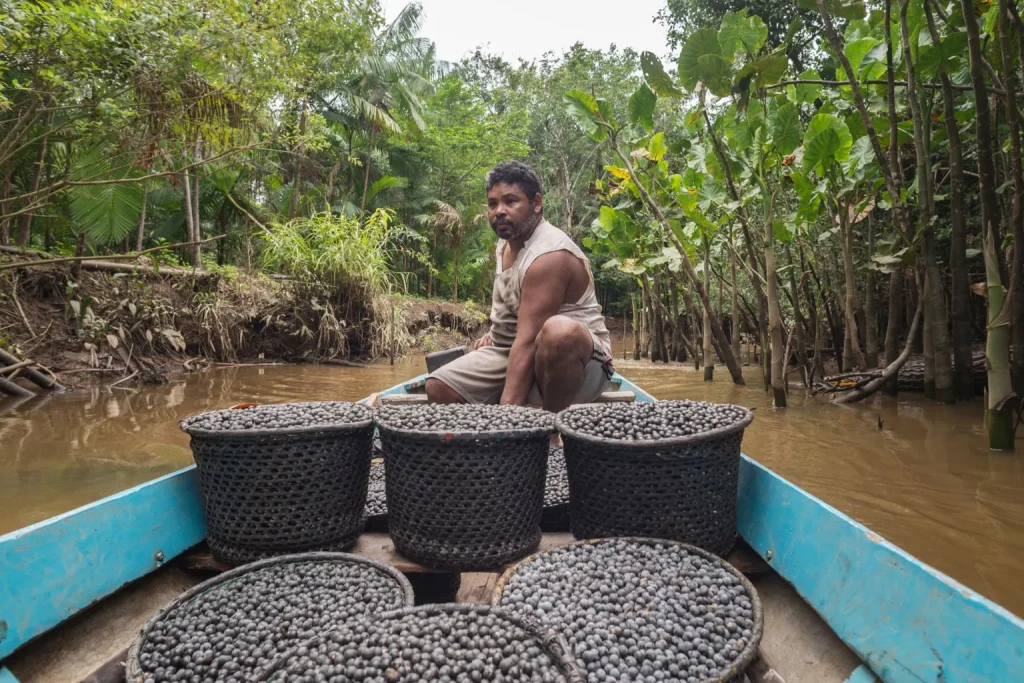
Inside Belém’s Bioeconomy Park, researchers collaborate with small businesses to improve preservation techniques. Açaí exemplifies what is possible: harvested across Pará state, it is now sold globally for premium prices and fuels a growing bio-based economy.
But the Amazon is more than a resource bank — it is home to almost 30 million people who rely on the forest. While President Lula has pledged to halve deforestation by 2030, the country is exploring how to balance economic development with environmental stewardship.
One promising model comes from Sarah Sampaio, who runs a shade-grown coffee company in Apui, one of the regions hardest hit by deforestation. Using agroforestry — growing coffee under native trees — her approach restores ecosystems and provides families with food and income. Her award-winning coffees prove that sustainability and profitability can coexist.
Still, experts warn that scaling up the bioeconomy must be done with caution. Expanding açaí plantations or increasing demand for biofuels could recreate the very pressures that damaged the Amazon in the first place. “Not every bio-based transition is a good one,” says Ana Yang of Chatham House. “If it destroys natural habitats or ignores social equity, it doesn’t solve the problem.”
As the world looks for alternatives to fossil fuels, the Amazon is emerging as a key player. Whether the next superstar ingredient is cupuaçu, bacaba or taperebá, Brazil is betting on a model of prosperity that thrives not by cutting down the forest — but by valuing it.