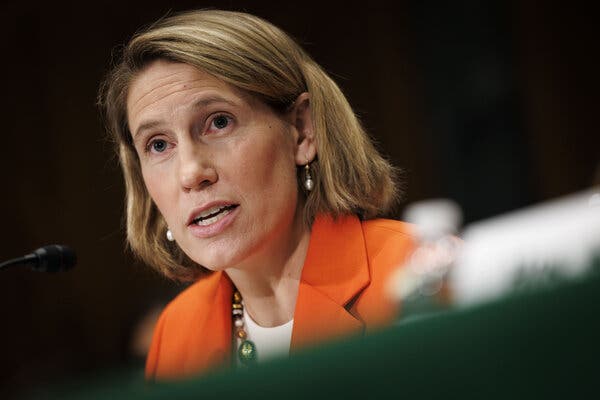
Commissioner Crenshaw Departs SEC, Leaving Agency with Only Republican Members
Caroline Crenshaw Concludes Tenure at SEC
Caroline Crenshaw, the sole Democratic member of the U.S. Securities and Exchange Commission (SEC), is set to leave the agency this week after over five years of service. Crenshaw is expected to finalize her duties by Saturday, 18 months after her official term was slated to end in June 2024. While commissioners can continue to serve until the Senate confirms a replacement, her departure will result in the SEC lacking any Democratic representation.
Appointed in August 2020, Crenshaw frequently criticized the agency's approach to digital assets. She opposed the resolution of the enforcement case against Ripple Labs and warned that weakening regulations on digital assets could lead to "significant market contaminations." The SEC will now consist of three Republican commissioners, two of whom were nominated by former President Donald Trump. As of Friday, Trump had not made any statements regarding the intention to nominate another Democrat to the SEC, although it is expected that the president will fill the positions to maintain bipartisan balance.
In a statement released on Friday, commissioners Hester Peirce, Mark Uyeda, and Chairman Paul Atkins emphasized that Crenshaw has been a "steadfast supporter of the agency's mission." She has not publicly announced her next steps in the private sector following her departure. Additionally, other financial agencies in the U.S., such as the Commodity Futures Trading Commission (CFTC), are facing similar leadership shortages after the departure of their interim chairman.
During the administration, both the CFTC and SEC adopted a softer approach to digital assets, rejecting enforcement actions and engaging more frequently with industry leaders compared to the previous administration. On Monday, Representative Maxine Waters called for a hearing to investigate the SEC's abandonment of cryptocurrency cases and what she termed "questionable policy changes."