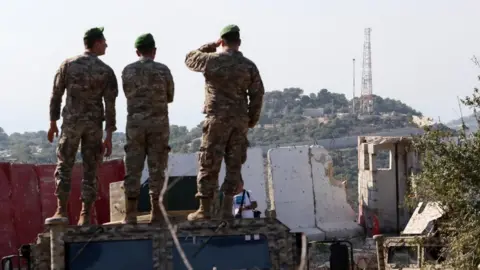
Lebanese Army Takes Control of Security in Hezbollah-Dominated South
Lebanese Army Announces Security Control in the South
The Lebanese army has declared that it has taken control of security in the southern region of the country, an area that has been dominated for decades by the Iranian-backed Hezbollah movement. This move comes amid fears that Israel may escalate its military offensive against the group. Lebanon is under intense international pressure, particularly from the United States, to disarm Hezbollah, a powerful militia and political party, following a ceasefire agreement in November 2024 that ended a devastating war between Israel and Hezbollah.
The army has set a deadline of the end of the year to clear the area south of the Litani River, approximately 30 kilometers from the Israeli border, of non-state weapons as the first phase of a government-supported plan. They stated that this objective has been achieved in an "effective and concrete" manner, but acknowledged that further work is needed to clear the area of unexploded ordnance and tunnels.
In response to the Lebanese army's statement, the office of Israeli Prime Minister Benjamin Netanyahu remarked that the efforts towards the complete disarmament of Hezbollah are "a promising start but far from sufficient," considering Hezbollah’s attempts to rearm and rebuild its terrorist infrastructure with Iranian support. American and Israeli officials have also expressed frustrations regarding the pace of the army's efforts.
In recent months, Lebanese soldiers have dismantled infrastructure in areas that were once controlled by Hezbollah in the south, encountering no resistance from the group, which claims to have adhered to the ceasefire agreement and withdrawn its fighters from those areas. However, Israel has accused Hezbollah of attempting to regain its military capabilities.
Recently, Israeli media reported that Netanyahu received the green light from U.S. President Donald Trump to intensify his military campaign against Hezbollah. Despite the ceasefire agreement, Israel has conducted near-daily strikes on targets it believes are connected to Hezbollah, continuing to occupy at least five positions in southern Lebanon, which the Lebanese government considers a violation of the agreement.
The next phase of the army's plan will focus on the area between the Litani and Awali rivers, including the port city of Sidon. However, there is no deadline for this phase, and the Lebanese army is facing shortages in funding and equipment. Additionally, it remains unclear whether Hezbollah will resist measures in other areas, as the group has declared it will not disarm north of the Litani River.
Lebanese President Joseph Aoun has rejected the use of force against the group, stating that such actions could worsen sectarian divisions and lead to violence. Hezbollah continues to enjoy considerable support from the Shia community in Lebanon, despite opposition claims that this presents a unique opportunity to disarm the group following the losses it suffered in the war.