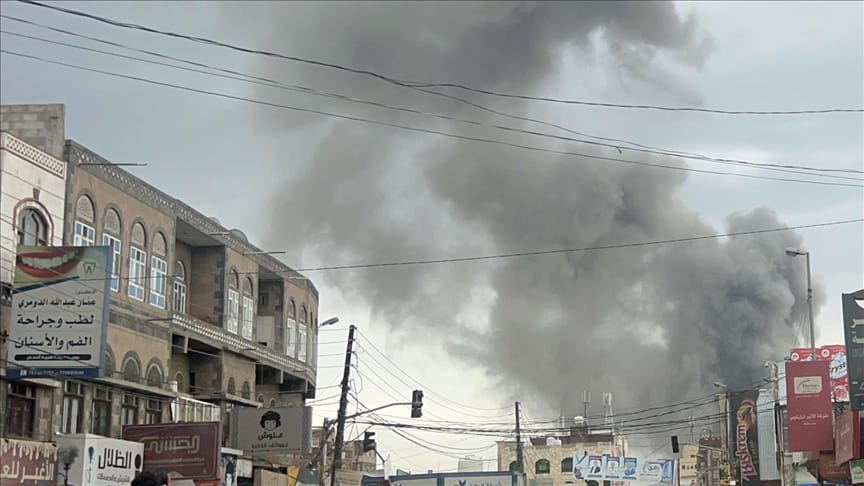
Saudi Arabia Accepts Yemen's Request to Resolve Southern Conflict
Saudi Arabia Responds to Yemen's Request
The Saudi Ministry of Foreign Affairs has welcomed the request from Yemen's Presidential Council, which is backed by Saudi Arabia, to organize a forum in Riyadh. The purpose of this forum is to resolve a deadly sectarian conflict in the southern part of the country, which has intensified tensions among Arab Gulf nations.
In a statement made on Saturday, the ministry urged southern groups to participate in the forum to "formulate a comprehensive vision for equitable solutions" regarding the situation in the south.
The President of the Council, Rashad al-Alimi, called on various groups and leaders from southern Yemen to gather for a meeting in Riyadh. Al-Alimi emphasized the "fairness and centrality of the southern cause" and rejected any unilateral or exclusive solutions.
Deadly tensions have erupted in recent days after the Southern Transitional Council (STS) launched a major offensive in the Hadramout and al-Mahra provinces, territories that represent nearly half of Yemen. Hadramout, a significant oil-producing province, holds cultural and historical importance for the kingdom, and its capture by STS last month was perceived as a threat by the Saudis.
STS is part of the anti-Houthi coalition in southern Yemen, but it is said to have plans to establish its own nation, generating conflicts with its partner, the internationally recognized Yemeni government.
Saudi Arabia has accused its coalition partner, the United Arab Emirates (UAE), of arming the STS, whose actions now threaten to divide Yemen into three parts, endangering Riyadh's national security. The UAE has denied these accusations, insisting that it supports Saudi Arabia's security.
In a statement on Saturday, the UAE expressed "deep concern" over the escalation of the situation and called on Yemenis to "prioritize wisdom and exercise restraint to ensure security and stability in the country."
The Saudi-led coalition was formed in 2015 to oust Houthi rebels from northern Yemen. However, after a brutal decade-long civil war, the Houthis remain entrenched, while Saudi and UAE-backed factions attack each other in the south.
On Friday, airstrikes conducted by a Saudi-led coalition reportedly killed 20 people, according to the STS. By the end of Friday, the UAE announced the withdrawal of all its military personnel from Yemen, signaling a possible détente with Saudi Arabia.
The UAE's Ministry of Defense stated that the withdrawal of forces from Yemen aligns with its decision "to conclude the remaining missions of its counter-terrorism units."
This complex situation continues to evolve, with analysts warning that the current violence may mark the beginning of a new dangerous phase in the war, where rival forces seek to redefine control over territory.