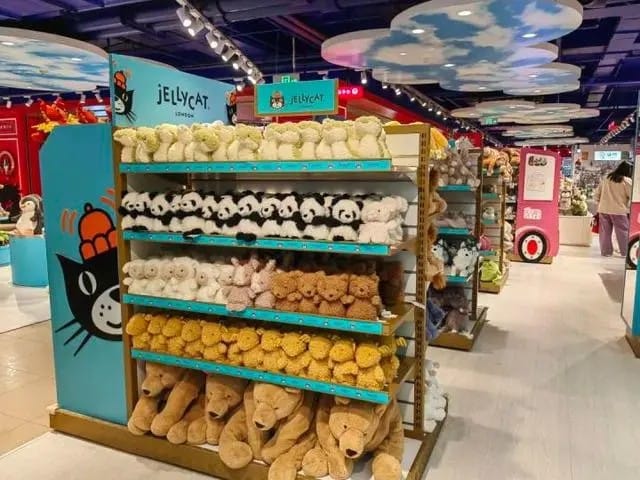
Jellycat Plush Toy Captivates Young Consumers in China
An Unexpected Success Among Young Chinese
Stella Huang, a young woman from Beijing, bought her first Jellycat toy during the pandemic after being inspired by a school friend. Although Christmas is not a traditional holiday in China, Stella was drawn to a gingerbread house-shaped toy she saw on the social media app RedNote.
"The festival doesn’t mean much to me... But I love seeing gingerbread houses," she states. Meanwhile, her passion for Jellycat has grown, and she now has a collection of 120 toys, with a total value of approximately 36,000 yuan (about $5,145).
Stella acknowledges that these plush toys help her regulate her emotions in a world filled with uncertainty.
A Unique Approach to the Chinese Market
Initially aimed at children, Jellycat toys have become a global sensation, significantly impacting young consumers in China who are seeking emotional comfort. According to Kasia Davies, Jellycat has managed to capture the tone of the pandemic and adapt to the needs of young customers.
The popularity of these toys has been amplified by pop-up experiences, where fans can purchase limited editions and participate in unique events. Jellycat has held such events in Shanghai and Beijing, where local vendors seized the opportunity to sell themed toys like teapots and mugs.
The Impact on Collectible Culture
In 2024, Jellycat reported a significant revenue increase, reaching £333 million. Estimates suggest that during the same period, sales to Chinese consumers generated approximately $117 million. The positive response from young people towards these products reflects a growing trend of seeking emotional connections through collectible toys.
Sales of collectible toys in China are expected to exceed 110 billion yuan this year.
Challenges Faced by Jellycat
Despite Jellycat's considerable success, fans are finding it increasingly difficult to discuss toys on social media. Stella, a devoted fan, mentioned that despite ongoing interest, collecting these toys is becoming more complicated. This evolution underscores a broader shift among young people, who, in the face of a stagnant economy, are seeking more accessible and interesting alternatives.