“Tricked and Terrified: South Africans Say They Were Duped Into Fighting for Russia in Ukraine”
Families in South Africa are pleading for help as several of their relatives remain trapped in Ukraine’s embattled Donbas region, claiming they were lured there under false pretences and coerced into serving Russian military units. The BBC has spoken extensively with relatives and with one man caught in the conflict, revealing a disturbing pattern of alleged deception, intimidation, and exploitation.
The man, whom we call Sipho for his safety, sent desperate voice notes to his family from a location near Donetsk, describing near-daily attacks, drone strikes, and the constant fear of being killed. Sipho says he was among a group of South Africans recruited with promises of high-level “security” and “bodyguard” training connected to South Africa’s MK party — a political movement led by former president Jacob Zuma. Instead of training, the men say they were handed over to Russian forces and transported close to an active frontline.
A Recruitment Web Shrouded in Politics
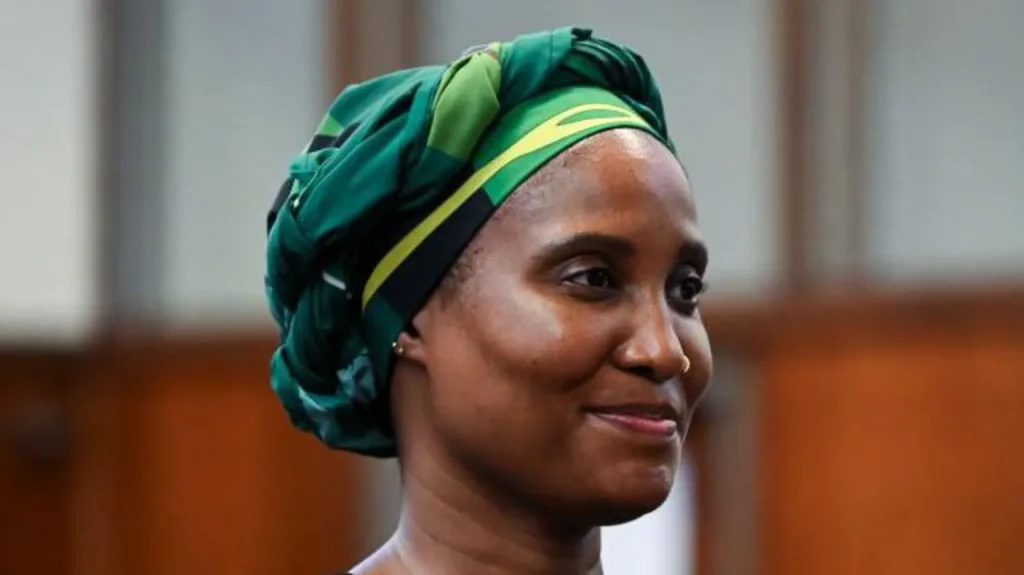
According to Sipho’s account, the recruitment was facilitated by two individuals — one of whom is Duduzile Zuma-Sambudla, daughter of Jacob Zuma and an MP for uMkhonto weSizwe (MK). In voice notes, Sipho claims she helped arrange his travel and encouraged the group to sign Russian-language contracts they could not understand. Her involvement has created political turmoil in South Africa, where she faces allegations of misleading citizens and facilitating their entry into a foreign conflict.
Zuma-Sambudla denies knowingly misleading anyone. In an affidavit seen by the BBC, she says she herself was “deceived and manipulated,” and believed the programme in Russia was for lawful, non-combat training. She claims she would “never knowingly expose anyone to danger.”
But for Sipho’s family, these explanations offer little comfort. His brother, Xolani, describes the family’s emotional turmoil:
“He is living in constant fear. He tells us that every night they hear explosions. They are terrified.”
From Job Opportunity to War Zone
Sipho left South Africa on 8 July 2025, believing he was travelling to Russia for professional skills development. Like many unemployed South Africans, he saw the offer as a rare opportunity. “They bought the flight tickets. Everything looked legitimate,” he said in one of his voice notes.
Once in Russia, the men were handed documents entirely in Russian and pressured to sign. According to Xolani, the group hesitated and contacted Zuma-Sambudla and the second recruiter for help. They travelled to Russia and reportedly encouraged the men to sign the contracts, assuring them the programme was legitimate.
Weeks later, in early August, the men were taken across the border into Ukraine. Sipho says they were separated and he, along with several others, ended up in the Donbas region under the direction of Russian personnel.
“We’re about 10km from the frontline,” he told his family. “This is nothing like what we were promised.”
The BBC has reviewed conversations from a WhatsApp group where some of the men communicate. The messages paint a picture of fear and desperation.
“We were told we are going somewhere safe,” one message reads, “but they took us deeper into danger. The place was hit three times by drones.”
Another message sounds like a farewell:
“If anything happens, guys… until next time.”
Possible Human Trafficking Case
South Africa’s elite police unit, the Hawks, has launched an investigation. It is examining whether the case involves:
-
human trafficking
-
illegal recruitment
-
exploitation
-
fraud
Both Zuma-Sambudla and her half-sister, Nkosazana Zuma-Mncube — who publicly accused her — have filed complaints with the police. Zuma-Mncube alleges that 17 South Africans, including several members of her family, were “deceived under false pretences” and delivered to Russian mercenary forces.
The South African government confirmed earlier this month that it had received distress calls from 17 citizens in Ukraine but has provided few public updates since then. Families say they have been left in the dark about diplomatic efforts to bring their loved ones home.
Families Plead for Action
With little information and no guarantee of rescue, families remain anguished.
“We sometimes go five days without hearing from him,” Xolani says. “We don’t know if he’s alive during those gaps.”
In his latest messages, Sipho repeats the same plea:
“It’s tough here… we all just want to come home.”