FSB claims it thwarted an assassination attempt on Sergei Shoigu. Moscow points to a “Ukrainian link”, but provides no evidence
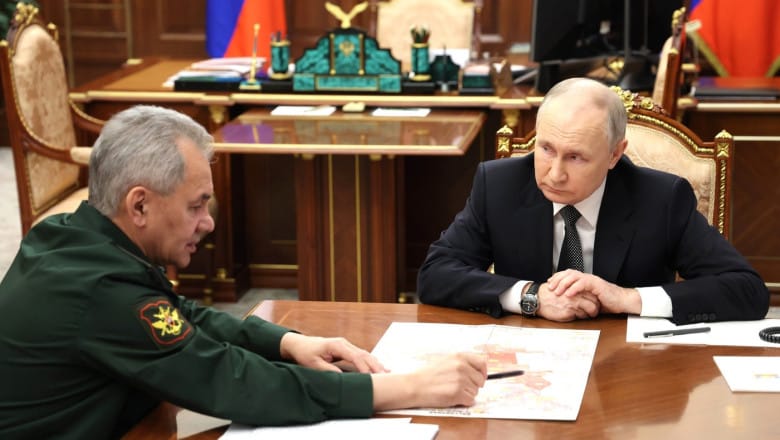
Russia has entered a new cycle of internal tension after the Federal Security Service (FSB) announced on Monday night that it had disrupted an alleged assassination plot targeting Sergei Shoigu, one of Vladimir Putin’s closest allies and the current Secretary of the Russian Security Council. The announcement, circulated rapidly through pro-Kremlin media, has raised significant doubts due to the complete lack of presented evidence.
FSB narrative: a “sabotage group” and a “Ukrainian connection”
According to the FSB, the attack was supposedly planned to take place during Shoigu’s private visit to a cemetery in Moscow. The service further claimed that it had uncovered a “Ukrainian link” in the preparation of the plot.
Local outlet MKRU publicly named Shoigu as the intended target. Yet, no photos, no recordings, no arrests, no physical evidence, and no independent confirmation were offered.
TVP World reports plainly: there is no proof supporting the FSB accusation.
Who is Sergei Shoigu?
Shoigu is one of the most influential figures in Russia’s power structure:
-
12-year Minister of Defense,
-
trusted confidant of Vladimir Putin,
-
overseer of the 2022 invasion of Ukraine.
In May 2024, Putin removed him from the Defense Ministry and reassigned him as Secretary of the Security Council — a post with enormous influence behind the scenes.
Shoigu was embroiled in a notorious public dispute in 2023 with the late Wagner leader Yevgeny Prigozhin, who accused him of corruption and mismanagement.
The cemetery scenario: a story built for emotional impact
The alleged assassination setting — a private cemetery visit — is highly theatrical. Analysts note that such imagery aligns with typical Kremlin information strategies, where dramatic personal vulnerability is used to reinforce narratives of internal and external threats.
Political context: an FSB play for power?
WarHial analysts underline that the FSB’s announcement comes amid:
-
internal power consolidation in Moscow,
-
growing authority of the Security Council,
-
tightening control over elite factions.
By invoking an assassination attempt, the FSB underscores a message of danger and instability, reinforcing the need for expanded security powers.
The key question
Was there truly a plot to kill Shoigu?
Or is the Kremlin once again shaping a narrative designed to mobilize public support, justify internal repression and project the image of a Russia perpetually under siege?