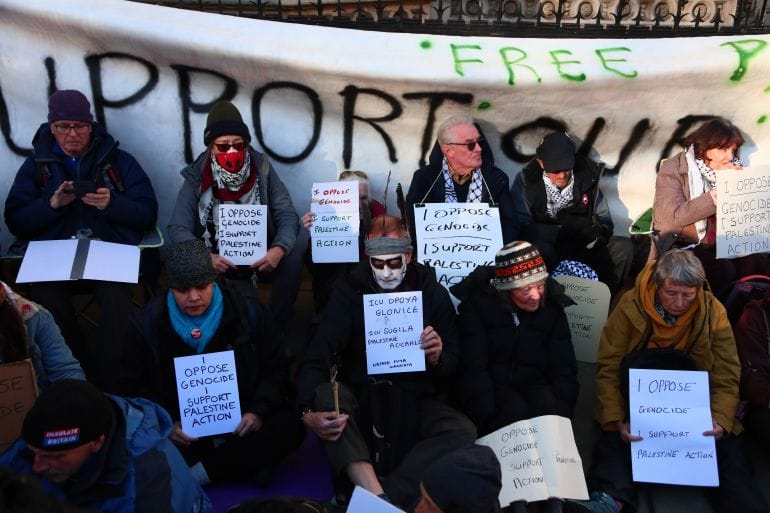
Pro-Palestinian Activists Achieve Victory Following Hunger Strike
Activism and Suffering in UK Prisons
In the final days of a hunger strike carried out over several months, three young pro-Palestinian activists detained without any charges faced mortality in their prison cells. Heba Muraisi, 31, had refused food for 73 days and suffered from severe pain, making her confinement unbearable. Weighing just 49 kg (108 lb), her body was deteriorating, and there were concerns that her organs could fail. Her memory was fading, and she experienced muscle spasms, signs of potential neurological damage.
Before announcing the end of their hunger strike, Muraisi, along with her colleagues Kamran Ahmed, 28, and Lewie Chiaramello, 23, were determined to continue. A Londoner working as a florist and lifeguard, Muraisi stated she had resigned herself to the idea of death but wanted to continue refusing food as a form of protest because she felt she was finally being “heard.” Ahmed, in a sent statement, described the conclusion of their strike after 65 days as “bittersweet.” Chiaramello, who has type 1 diabetes, alternated fasting daily for 46 days.
In total, eight individuals participated in the protest since November. Currently, only one prisoner, Umer Khalid, continues to refuse food. “He was willing to go all the way,” Ahmed, who worked as a mechanic, said. “But others were not willing to see me take another step.” Described by friends as extremely frail, Ahmed had lost 25% of his body weight. His heart muscle had diminished, he suffered from chest pains, and he had lost hearing in one ear. Speaking was challenging for him, and walking made it difficult to breathe.
Throughout the protest, the government stated that the group would receive a fair trial, claimed it could not intervene in bail matters, which are judicial issues, and asserted that welfare procedures in prison were being adhered to. The government did not comment on the conclusion of the latest hunger strikes.
The Palestine Action group, to which these activists belong, claimed responsibility for two attacks on the property of Elbit Systems, one of Israel's largest arms manufacturers, condemning the UK’s collaboration with atrocities committed by Israel. Following the end of the hunger strike, another politician highlighted concessions made by the government, including a meeting between Hoxha and the leadership of the extremism unit.
Furthermore, activists expressed hope that the strike raised awareness regarding Elbit’s role in the genocide in Gaza. “Our protest will be remembered as a moment of pure defiance; a shame for the British state,” Palestine Action stated, announcing the continuation of their fight for justice.