Spain’s High-Speed Network in the Shadows: Fatal Derailment Near Córdoba Raises Questions About Infrastructure and Oversight
The moment everything left the rails
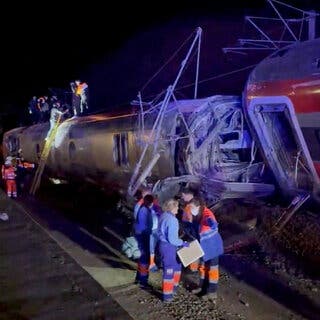
A high-speed train departing Málaga at 18:40 local time (17:40 GMT) derailed roughly ten minutes after departure on a straight section of track between Málaga and Córdoba and veered onto the opposite line, colliding with a train bound for Huelva. The privately operated Iryo service reportedly carried about 300 passengers; the Renfe service traveling the opposite direction had roughly 100 on board. The toll has risen to at least 21 dead and more than 73 injured, with over 30 in serious condition; authorities warned that those figures could increase as operations continue.
Eyewitness images and on-scene reports describe scenes of severe devastation: twisted carriages, contorted metal and people trapped amid wreckage. Córdoba firefighters recounted rescue operations in which crews had to remove deceased passengers to reach survivors. The mayor of Adamuz described the scene as “like a nightmare,” a sentiment echoed by first responders grappling with constrained access and complex extrications.
“We even had to remove a dead body to reach a living person.” – Head of Córdoba firefighters
Straight track, unexpected questions
Investigators and officials — including ADIF, the infrastructure manager, and Transport Minister Óscar Puente — highlighted a key anomaly: the accident occurred on a straight, recently refurbished stretch of line (works completed as recently as last year). At high speed, derailments on straight track are atypical; that fact channels the inquiry toward a narrow set of technical and operational hypotheses that cannot yet be confirmed.
Possible contributing factors — rolling stock and infrastructure
With no definitive conclusions expected for weeks at minimum, technical analysis remains provisional but necessary. On a straight section at high velocity, likely avenues of inquiry include:
- Rolling-stock failure: a bogie defect, wheelset imbalance or suspension failure can cause sudden derailment. The model involved, Freccia 1000 type trains, are designed for very high speeds and subject to stringent standards; nevertheless, catastrophic outcomes can follow component failures.
- Infrastructure defects: even recently renovated track can suffer from undetected rail fractures, a malfunctioning switch, loose fastenings, ballast subsidence or erosion that undermine stability. The quality and oversight of maintenance and recent works will be scrutinized.
- Human and operational factors: while a derailment on a straight line weakens the hypothesis of a driver-initiated maneuver, signaling errors, miscoordination between trains on adjacent tracks or procedural lapses remain plausible contributors.
- Protection systems: Spain employs automated train control systems on principal corridors — including ERTMS/ETCS. The investigation must establish whether speed monitoring, signaling and traffic control systems functioned as intended or were circumvented by technical anomalies or operational decisions.
Rescue operations and the public trauma
Responders faced the core challenges of mass-casualty incidents: difficult access to wreckage, the need for careful extrication, rapid triage and transport to hospitals already stretched by the volume of casualties. The nearby hospital foyer filled with passengers and relatives; Red Cross teams activated psychosocial support for those affected. Families’ distress, amplified by delays in official information, played out across social media; authorities urged survivors to register their status on designated platforms to ease family reunification efforts.
Responsibility and governance: who answers?
ADIF, as infrastructure administrator, occupies the center of the technical inquiry, while Iryo and Renfe will be required to provide onboard data, speed logs and technical records for the trains involved. In a rail system increasingly split between private operators and public infrastructure managers, assigning legal and financial responsibility grows complex. Investigators will examine maintenance schedules, inspection reports from the past year and the emergency protocols executed that night.
Echoes from the past: lessons under scrutiny
Spain’s memory of rail catastrophe is not distant: the Galicia derailment of 2013 left roughly 80 dead and provoked intense criticism of regulation, infrastructure and operational procedures. That episode prompted technical revisions and operational changes; current scrutiny will focus on whether reforms were implemented systemically and effectively enough to prevent recurrence. If investigations uncover persistent negligence or shortcomings, political fallout and demands for accountability are likely to follow.
Immediate impact: traffic, economy and public trust
Rail services on the Madrid–Andalusia corridor were suspended, with major hubs — Atocha, Sevilla, Córdoba, Málaga and Huelva — mobilized to support affected passengers. Disruption on this south–north axis will have immediate economic consequences for passenger and freight movements, and a significant symbolic cost: a loss of confidence in Spain’s high-speed network. Operators, insurers and public authorities will face pressure over compensation and remediation; civil and criminal litigation is likely once causes are determined.
Institutional response and the international dimension
Official responses were swift: Prime Minister Pedro Sánchez characterized the night as one of “profound pain,” and the Royal Household extended condolences. European leaders, including Emmanuel Macron and European Commission President Ursula von der Leyen, expressed solidarity. Given the rolling stock’s European origin and the availability of international best practices for accident reconstruction, the probe is expected to involve foreign technical expertise as required.
What follows: a protracted, multi-disciplinary inquiry
The investigation will combine mechanical analysis of train components, retrieval and forensic review of onboard data recorders, metallurgical examination of rails and parts, and a comprehensive audit of operational and maintenance procedures. Public demand for transparency will be intense: families, the rail sector and political actors will insist on clear answers. Simultaneously, immediate priorities include sustained psychological support for survivors and consistent, accurate communications to limit misinformation.
The Warhial Perspective
This accident transcends individual tragedy to become a severe stress test of Spain’s rail model — one premised on speed and efficiency. If investigations reveal shortcomings in maintenance execution or in the supervision of infrastructure, the consequences will ripple across the entire regulatory architecture: funding priorities, audit regimes and the clarity of contractual responsibility will all come under pressure. Partial privatization introduced competition but also fragmented accountability that, in crisis, can create a legal and moral labyrinth.
Warhial’s forecast anticipates a cycle of targeted reforms: a wave of public and private inquiries, renewed pledges to bolster safety and temporary measures to restore confidence. Yet without structural change — stronger independence for oversight bodies, transparent and enforceable maintenance regimes, and unambiguous contractual accountability between ADIF and private operators — the risk of further serious failures will persist. In the medium term, the political effect will be acute: pressure for administrative and possibly criminal accountability, potential dismissals and an intensified public debate over the real cost of operating at extreme speed.
Ultimately, the response to this calamity must prioritize transparent investigation and unequivocal support for victims. Any attempt to minimize, conceal or delay information will corrode public trust more deeply than the physical damage wrought on the rails this fatal night.