Young Woman Killed, Man Critically Injured in Shark Attack at Remote Australian Beach
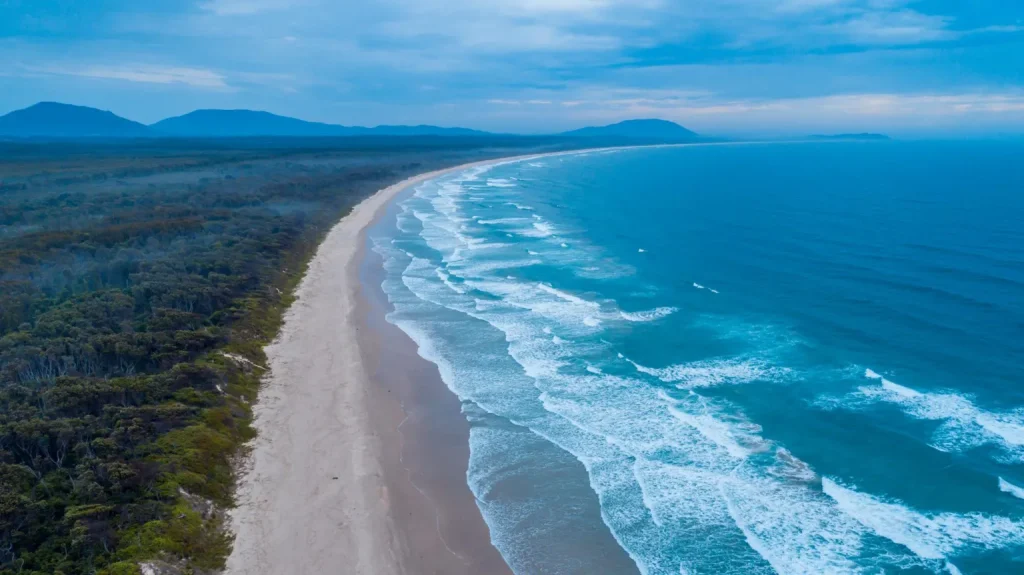
A tragic shark attack unfolded early Thursday morning at a remote beach in New South Wales, Australia, leaving a young woman dead and a man in his twenties critically injured. The incident occurred at Kylies Beach, located in the rugged and isolated Crowdy Bay National Park, approximately 300 km north of Sydney.
Police confirmed that the woman, believed to be in her early twenties, died at the scene despite attempts by bystanders and paramedics to save her. The man, also in his twenties, sustained severe leg injuries and was airlifted to Newcastle Hospital in critical condition.
Emergency services were alerted just after sunrise. Due to the remote nature of the area, response teams faced significant challenges accessing the site quickly. Authorities praised the quick-thinking actions of a bystander who applied a makeshift tourniquet to the injured man’s leg — a move paramedics say “likely saved his life.” NSW Ambulance Superintendent Josh Smyth described the action as “heroic,” noting that without it, the patient may not have survived long enough to receive emergency treatment.
Marine authorities suggested that the attack was most likely carried out by a large bull shark, a species well known to inhabit both freshwater and saltwater environments. Bull sharks are among the top three deadliest shark species worldwide, according to data from the International Shark Attack File.
In response to the attack, officials immediately closed Kylies Beach and began deploying smart drumlines — specialized devices designed to attract, capture, tag and relocate sharks. Surf Life Saving NSW announced that nearby beaches would remain closed for at least 24 hours while drones conduct aerial surveillance of the waters.
“This is an unimaginable tragedy. Our thoughts go out to the families of both the young woman who lost her life and the man who is now fighting for his,” said Surf Life Saving NSW CEO Steve Pearce. He urged the public to stay out of the water in the surrounding area and follow all instructions issued by lifeguards.
This marks the fifth fatal shark attack in Australia this year, reigniting national discussions surrounding ocean safety, climate impacts on marine life, and the increasing presence of sharks in recreational waters. Less than three months ago, a man was killed in a rare shark attack on Sydney’s northern beaches, adding to growing concern among both locals and tourists.
Marine biologists warn that environmental factors — including warming ocean temperatures and shifts in prey distribution — may influence shark behavior and migration patterns. Isolated beaches like Kylies Beach carry additional risks because emergency response times are significantly longer.
Investigations into Thursday’s attack are ongoing. Experts are analyzing bite patterns, environmental conditions, and drone footage to determine whether the shark remains in the vicinity and whether further safety measures are needed.
For now, the region remains on high alert, and communities along the New South Wales coastline are left mourning yet another tragic loss caused by one of the ocean’s most powerful predators.