The Explosive Nature of Conflict: Israeli Retribution Against Lebanon
Shadows of War: A Profoundly Introspective Conflict
The recent escalation of Israeli airstrikes against Lebanon has brought the humanitarian crisis and the geopolitical complexity of the region back into focus. Israel has intensified its bombardments on areas not controlled by Hezbollah, raising critical questions about its military strategies and objectives. From attacks on residential areas to the destruction of essential facilities, the dynamics of these actions appear deeply rooted in a war logic that seeks not only to dismantle enemy infrastructures but also to instigate a profound social and humanitarian crisis in Lebanon.
Territory as a Weapon of War
In recent days, Israeli strikes have concentrated on strategic locations in Beirut and southern Lebanon, where, although the majority of the population supports Hezbollah, innocent civilians have also been among the victims. The assaults in Jnah and its suburbs serve as a direct response to Hezbollah's involvement in the regional conflict, thereby increasing the risk of violence escalation. Perceiving itself entitled to protect its borders, Israel employs brute force not only against its declared enemy but also against a civilian population already enduring suffering exacerbated by numerous economic and political crises.
Refugees and Destruction: A Stolen Generation
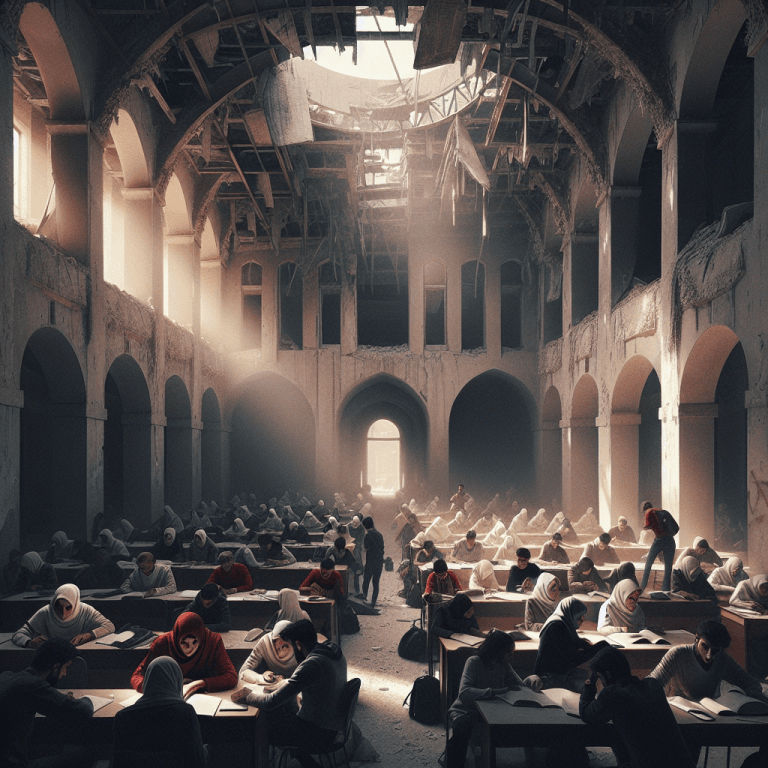
Recent estimates indicate that more than one million Lebanese have been forced to leave their homes. Many of these families live in a state of extreme uncertainty, as bombings have led to the destruction of vital infrastructure, such as hospitals and roads. The psychological and physical impact on these individuals is profound, creating a vicious cycle of fear, helplessness, and despair. Many voices within Lebanon commend the resolve to not abandon their homeland, believing it better to fight for survival than to become mere victims of outsiders.
The Case of Rmeish: A Falling Star in the Heart of Conflict
In an emblematic example, Rmeish, a predominantly Christian village, has become a symbol of resistance. The words of Priest Najib Al Amil, who refuses to leave his village, reflect the depth of the relationship between individuals and their land. This connection is not merely a matter of geographical belonging, but a struggle for identity and existence. Many believe that the walls of their village harbor not just homes but the history and traditions of an entire community.
Israel's Security Policy: Extremism and Geostrategic Analyses
The recent decision by Israel to control territories in southern Lebanon up to the Litani River in order to create a security buffer zone raises questions about its long-term intentions. Analyzing recent statements from Defense Minister Israel Katz suggests not only a military strategy but a long-term vision to expand control over resources and land. This plan, evidently inspired by the situation in Gaza, is seen by international critics as a blatant violation of the sovereignty of an already fragile state. Criticism from the United Nations and other humanitarian organizations may not immediately alter the course of these events, yet diplomatic creativity and adeptness will require a significant global push.
The Military Impact on Society and War Strategies
As Israel continues to bomb and destroy infrastructures, an open question remains: how far can the limits of these actions extend in terms of efficiency? With the increasing number of civilian casualties, including healthcare workers, the legitimacy of Israeli actions is increasingly challenged on the international stage. History teaches us that wars are not won through sheer devastation, but through the willingness to seek long-term solutions. A conflict between the state and the Hezbollah resistance organization seems to escalate into one that will affect millions of innocent people, regardless of political or religious affiliations.
Rhetoric and Reality: An Analysis of Perceptions
The perceptions of Lebanese citizens regarding Israeli military power and Hezbollah's influence highlight an interesting dynamic. While many Lebanese view Israel as the stronger force, it is notable that Hezbollah has shown considerable guerrilla capabilities on the ground. This asymmetry of forces suggests that despite Israel's technological superiority, conventional warfare methods will not yield a sustainable victory without a profound understanding of the local context.
Food for Thought: What Lies Ahead?
Amid these conflicts, the future of the region grows increasingly uncertain. An international arena marked by instability and radicalization makes any dialogue seem a distant dream. The war in Lebanon is no longer merely a regional issue; it has become a symbol of human humiliation and the need for a solution. However, the reconciliation process will require genuine commitment from all parties involved, including international actors.
The Warhial Perspective
Israel finds itself in a complex strategic-military dilemma. As it intensifies its attacks against Lebanon, a potential short-term victory may lead to deeper long-term instability. The occupying regime is likely to seek ways to solidify its control over southern Lebanon, but such a strategy is prone to inciting violent reactions from the local populace, perpetuating a cycle of violence. International reaction and global public opinion will further influence the future of the conflict, but without meaningful dialogue, the prospect of peace remains distant. A viable alternative must be found, not only for future Lebanese generations but also for regional security.