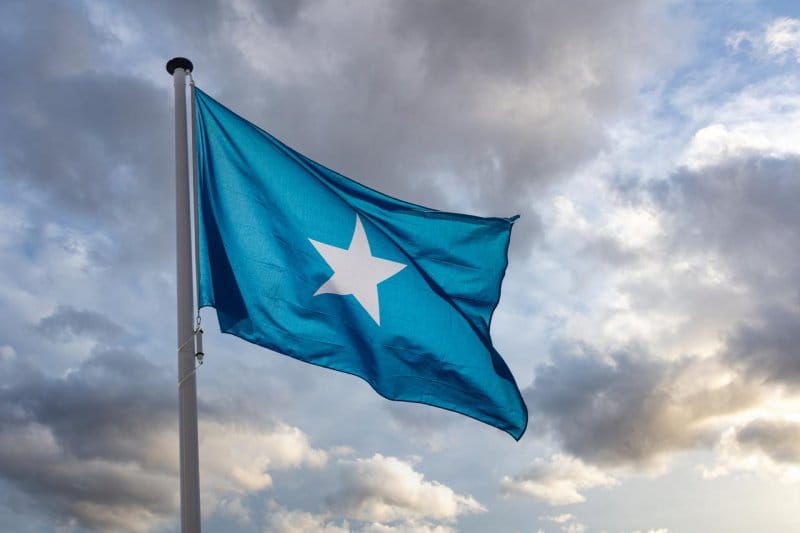
Somalia Reasserts Sovereignty by Canceling Agreements with UAE
Somalia's Decision: A Protection of National Sovereignty
The State Minister for Foreign Affairs of Somalia, Ali Omar, explained that the Somali Government's decision to annul all agreements with the United Arab Emirates, made on January 12, was neither abrupt nor reckless. This action came after a long period of restraint and repeated diplomatic commitments, in a sober assessment of what any responsible government must defend: sovereignty, constitutional order, and national unity.
For years, Somalia has sought to collaborate with external partners, guided by the expectation that commitments would be based on mutual respect and positive cooperation. However, the patience of the Somali government has not been infinite. When international cooperation begins to bypass constitutional institutions and fragment national authority, it becomes illegal interference.
Sovereignty is not an empty slogan; it is a system that requires political, security, and economic relations with foreign states to be conducted through recognized national institutions. Somalia cannot accept security structures that operate outside its constitutional framework.
Critics have labeled the annulment of the agreements as "drastic," suggesting that Somalia should have tolerated these practices for short-term stability. However, fragile states do not become stable by accepting fragmented authority led by external interests, but rather by strengthening their institutions. The annulment of agreements with the UAE, particularly those made with subnational administrations, must be understood in this context.
This measure reflects a broader regional reality, considering that Somalia is at a strategic intersection, linking the Red Sea, Gulf of Aden, and the Horn of Africa Desert. Any use of Somali territory, ports, or political space to advance external conflicts poses risks not only to Somalia but also to regional trade and stability.
Somalia's decision to annul agreements with the UAE marks a paradigm shift in national policy, asserting itself as an equal sovereign actor on the international stage.