Revolutionizing Acoustic Detection: Democratizing Drone Surveillance
Innovation on the Sound Path
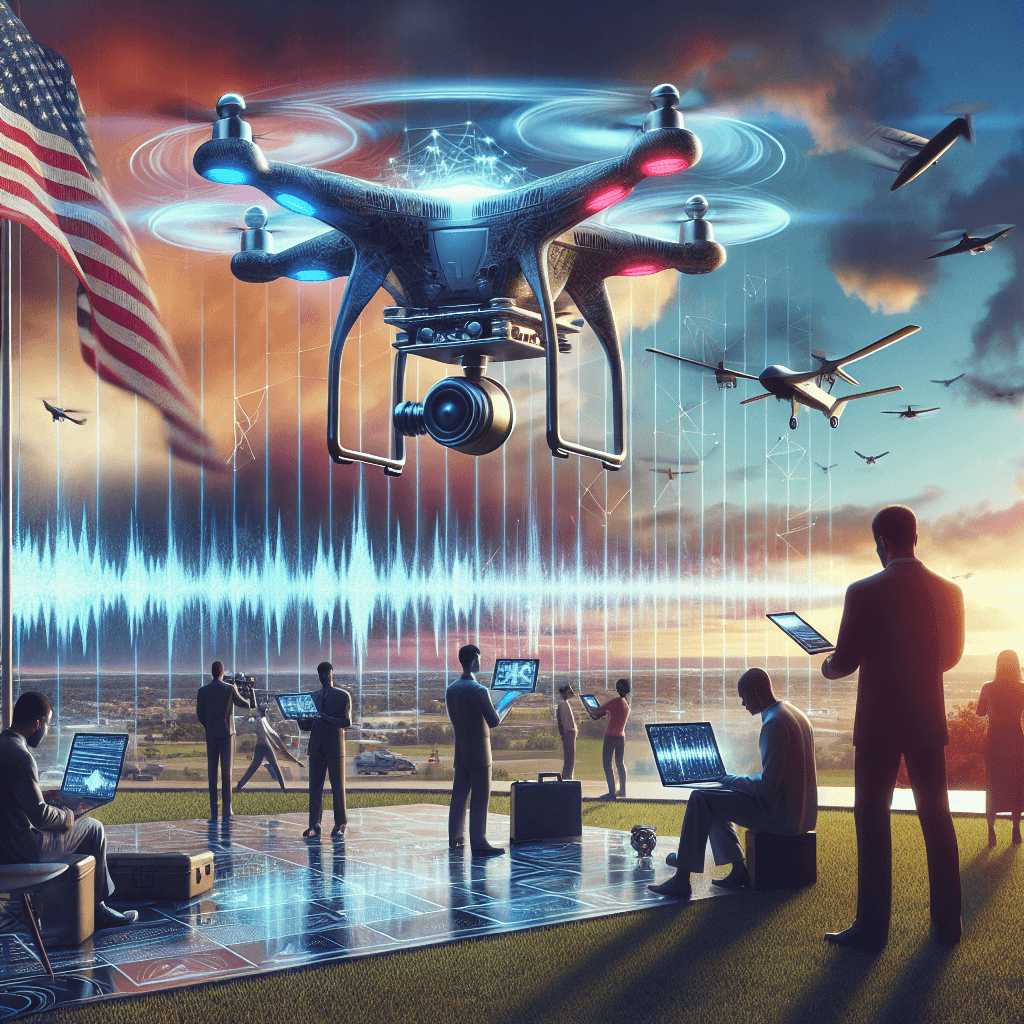
In an era where drones are becoming increasingly accessible and ubiquitous, the demand for effective detection technologies has surged exponentially. The recent innovation by [TN666], known as "Batear," showcases an ingenious and affordable solution: an acoustic drone detector constructed from a single ESP32-S3 and an I2S ICS-43434 microphone. With an estimated cost of merely $15, this device not only democratizes detection technology but also redefines our approach to aerial security.
Technological Giants and the Homecoming
Traditional detection techniques, such as RADAR, are often expensive and CPU-intensive, necessitating substantial financial resources. However, [TN666] has opted for a different route: looking back to the acoustic detection methods employed in the pre-RADAR era. This concept, termed "retrovation," amalgamates modern innovation with solutions that proved effective in the past, such as Goertzel filters that analyze the acoustic frequencies emitted by drones.
Security and Privacy in the Digital Age
One of the primary advantages of this system is its independence from external connections. Many cloud-based detection solutions involve sending data to external servers for processing, thereby raising security and privacy concerns. In contrast, Batear utilizes edge computing, meaning that analysis takes place locally on the device. This approach not only guarantees data confidentiality but also enables a more rapid response in the event of attacks or inappropriate surveillance.
Adjustment and Calibration: Challenges of the Process
Of course, not all solutions are devoid of challenges. For instance, the acoustic system may encounter difficulties due to environmental noise. [TN666] suggests employing calibration methods to mitigate the effects of background noise, an essential consideration when addressing urban environments or bustling areas. Covering the microphone with a special material can diminish wind noise, enhancing the accuracy of the detector.
The Future of Drone Detection: From Acoustic Analysis to Machine Learning
[TN666]'s innovation does not end here. Although the solution based on Goertzel filters is elegant and effective, the developer aims to explore machine learning models that could enhance the detector’s performance. Implementing neural network models on a compact device, such as the ESP32-NN, could yield significant benefits concerning frequency detection and, by extension, drone identification.
Socio-Technical Impact
This project has the potential to transform our approach to security issues associated with drones. With minimal costs, this solution becomes accessible not only for security organizations or government agencies but also for ordinary citizens who wish to protect themselves from potential threats. The democratization of detection technologies has the capacity to provide extensive protection, thereby enhancing the sense of security within communities.
The Past and Future: Lessons and Opportunities
[TN666]'s system reminds us that, despite the rapid pace of technological advancement, sometimes it is wiser to revert to simpler and more traditional solutions. This approach invites us to explore other fields where fundamental principles can be applied in constructing innovative technologies. Undoubtedly, we will witness a proliferation of these acoustic solutions as communities seek more effective and accessible methods for self-protection.
Moving Forward Towards Acoustic Understanding
As technology progresses, it is crucial to comprehend not only acoustic detection but also the ethical and legal implications of its use. The issue of utilizing drones for espionage or surveillance must be addressed with seriousness. As technology becomes more accessible, the challenges related to inappropriate use will multiply.
This project illustrates that innovation and accessibility do not have to come hand-in-hand with security or privacy risks. In a world increasingly crowded with drones, it is conceivable that the acoustic solution offered by Batear could signify the commencement of a revolution in how we protect our airspace.
The Warhial Perspective
The innovation by [TN666] serves as a brilliant example of how technology can become a tool for community empowerment. However, it is essential that the use of these devices is regulated to prevent abuses. If the democratization of detection technology continues, it is vital that ethical principles and accountability standards are incorporated into every facet of this transition. In the future, we should expect a rise in acoustic solutions alongside stricter regulations governing their use, ensuring a balance between individual protection and respect for privacy. This complex issue will require ongoing dialogue between developers, legislatures, and citizens.