Ukraine War Enters a Critical New Stage as Russia Advances Slowly and Diplomacy Intensifies
Nearly four years after Russia launched its full-scale invasion, the conflict in Ukraine has settled into a brutal, grinding phase that is reshaping global geopolitics. On the battlefield, Russia continues to inch forward in the east, capturing villages and strategic positions at the cost of enormous resources. In diplomatic circles, the United States is pushing urgently for a peace framework, while Kyiv insists that no agreement can involve surrendering territory.
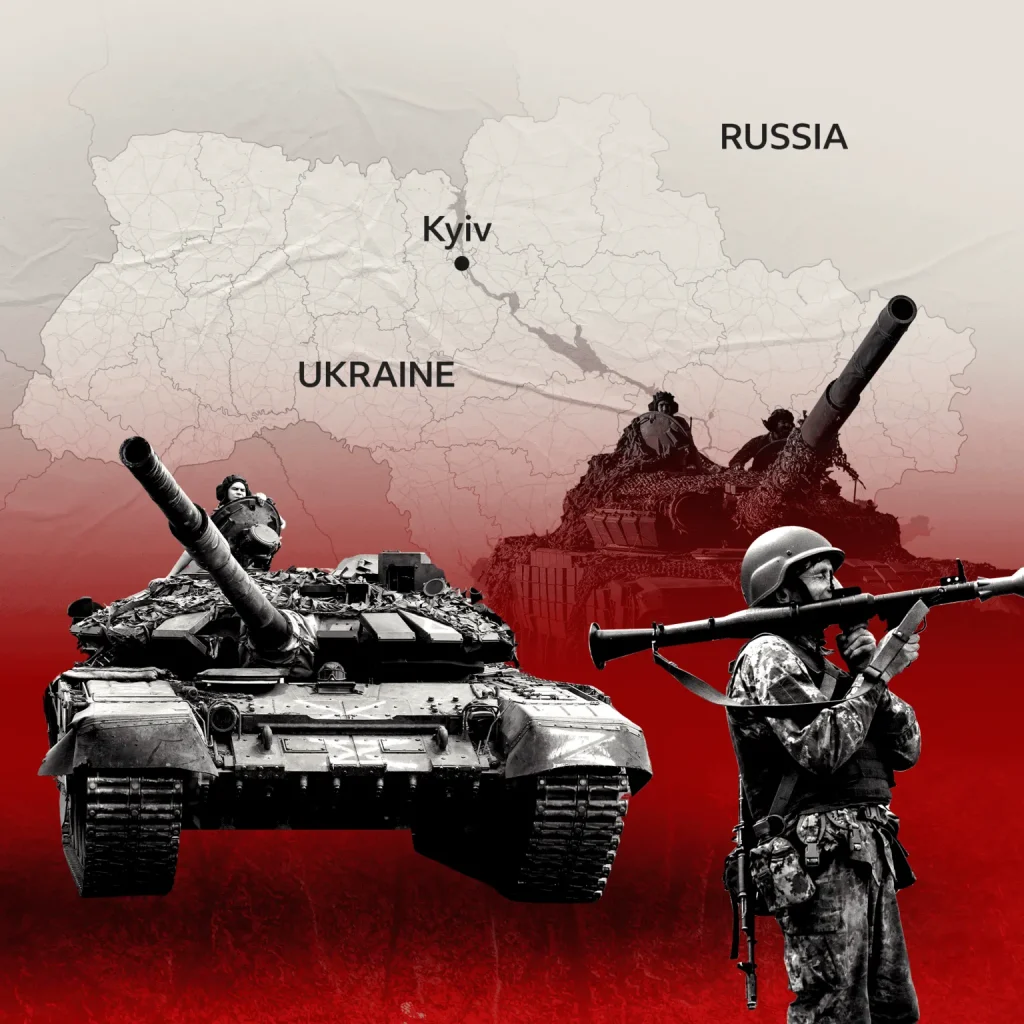
The gap between the conditions demanded by Moscow and those acceptable to Ukraine remains vast, and this gulf is mirrored on the map — where shifting front lines reflect a war without a clear end in sight.
Russia’s Methodical Advance Through Donbas
Over the past year, Russian forces have made gradual progress across the open fields and small towns of Luhansk and Donetsk. These regions, collectively known as the Donbas, have long been the heart of Russia’s territorial ambitions. Moscow seeks full control not only of Donbas but also of parts of Zaporizhzhia and Kherson regions, which it claimed to annex in 2022 despite never fully occupying them.
The Institute for the Study of War (ISW) notes that Russia’s recent improvements in drone reconnaissance, precision strikes and aerial surveillance have allowed it to press forward while reducing casualty rates. Despite these gains, Ukraine’s defensive lines — especially the deep “fortress belt” built in western Donetsk over more than a decade — remain a major obstacle to any rapid Russian breakthrough.
These layered defenses protect key cities such as Kramatorsk and Sloviansk, the administrative anchors of Ukrainian-controlled Donbas. A decisive push here could dramatically change the war, but analysts stress that such an achievement remains far off.
Kharkiv Region Faces Renewed Pressure
To the north, Russia has revived its efforts to exert control over the Kharkiv region, particularly around the town of Kupiansk. Moscow’s stated objective is to carve out a buffer zone on Ukrainian territory to prevent cross-border drone and missile strikes. However, the front has been fluid, with small villages passing repeatedly between Russian and Ukrainian control.
Russia launched a surprise incursion into northern Kharkiv in mid-2024, seizing several settlements and forcing thousands of civilians to flee. Since then, fighting has intensified around Vovchansk and Lyptsi, where Russia hopes to push artillery within striking distance of Kharkiv city — Ukraine’s second-largest population center.
Ukrainian Drone Campaign Targets Russia Itself
As Russia presses along the front line, Ukraine has expanded the war deep into Russian territory. Over the past year, Kyiv has used long-range drones to strike military bases in Murmansk, Irkutsk, Ryazan and other regions. Ukraine claims these operations have inflicted billions of dollars’ worth of damage on strategic aircraft and infrastructure. Moscow disputes the scale of the losses, but independent verification remains difficult.
More recently, a massive oil depot near Sochi caught fire after what Russia called a Ukrainian drone attack. These strikes underscore Ukraine’s message that the war will not remain confined to its borders.
Diplomatic Pressure and a Controversial Peace Proposal
Since entering office in January 2025, U.S. President Donald Trump has made negotiating an end to the war a top foreign-policy priority. An early draft peace plan — reportedly shaped by U.S. and Russian officials — suggested that Ukraine would cede all of Donbas, Crimea and the currently occupied parts of Zaporizhzhia and Kherson to Russia. It also proposed severe limits on the size of Ukraine’s military.
Kyiv rejected the proposal immediately and forcefully. President Volodymyr Zelensky warned that accepting territorial concessions would guarantee future wars. This resistance, along with European criticism that the draft favored Russia, prompted revisions in Geneva this month. U.S. and Ukrainian officials say progress has been made, but the details remain classified — and Russia has not participated.
A War Without End — For Now
Despite constant speculation about diplomacy, the military reality remains bleak. Russian forces continue to pressure the front line. Ukraine struggles with ammunition shortages and relies heavily on U.S. air defense systems to protect its cities from missile and drone barrages.
Analysts agree on one point: even if negotiations resume, neither side appears close to accepting the other’s demands. And as winter approaches, the conflict moves into yet another phase — slower, bloodier and more uncertain than ever.