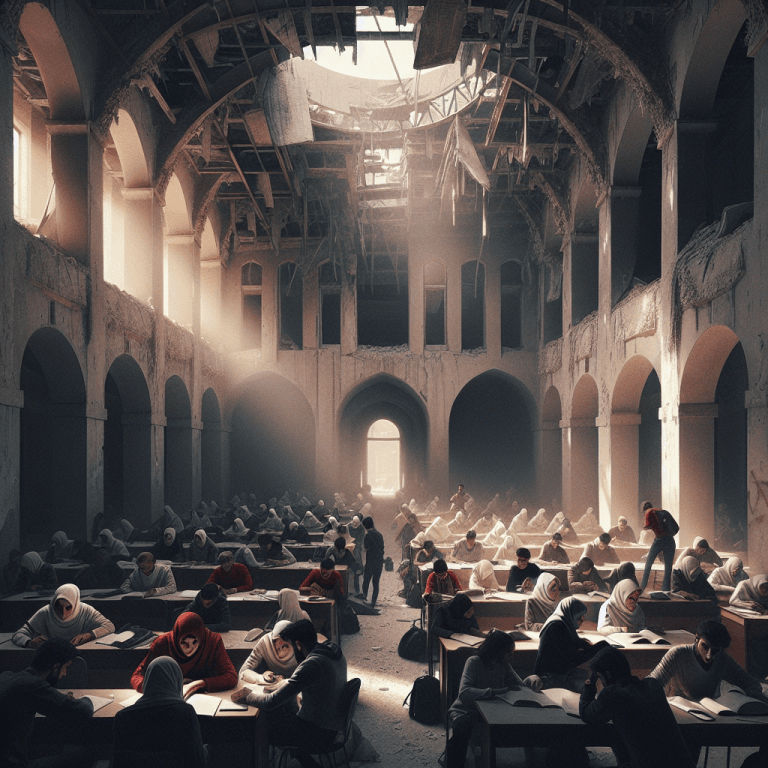
El-Daein Hospital: A Harrowing Story Amidst Sudan's Conflicts
Nightfall Fury: The Attack on El-Daein Hospital
Set against the backdrop of a sacred holiday, when Muslim communities worldwide observe Eid, a horrific attack shattered the essence of human hospitality at El-Daein Hospital. This tragedy transcended mere incident; it symbolized the humanitarian disaster engulfing Sudan, highlighting the brutality and ambiguity of the conflict between the armed forces and the Rapid Support Forces (RSF). According to the World Health Organization (WHO), 64 individuals have lost their lives, including 13 children, while another 89 suffered severe injuries from the airstrike. The unsettling details of this incident will resonate in the hearts of the local population for generations.
A Convergence of Interests and Powers
The attack stems from a complex struggle for power that began in April 2023, as Sudan found itself embroiled in a devastating civil conflict. The Sudanese military vehemently denied allegations of responsibility for the bombings at the hospital, a critical facility for medical services in the region. Conversely, the RSF contended that an army drone was responsible for the destruction. These disputes epitomize a reality where all parties involved appear comfortable deriding their adversaries, disregarding the devastating humanitarian impact.
“Enough blood has been shed,” asserted Tedros Adhanom Ghebreyesus, the WHO leader, calling for a de-escalation of the conflict.
Impact on Healthcare Services
El-Daein is not merely a hospital; it serves as a pillar of the community in Eastern Darfur, providing vital medical assistance to tens of thousands. With every attack on medical facilities, the humanitarian crisis deepens. WHO reported over 2,036 attacks on healthcare institutions since the onset of the conflict, and this latest incident underscores the fact that public health stands on the verge of collapse. “Healthcare should not be a target,” emphasized Ghebreyesus, evidently alarmed by the ongoing degradation of services.
Beyond Fratricide: The Roots of Conflict
But from where did this hatred originate? The mud and blood on Sudan's streets have roots that extend through decades of historical, ethnic, and political confrontations. The dilemma is complex: the RSF, once an ally of the army, became a fierce rival following a coup. Power, betrayal, and personal ambitions have created fertile ground for an escalating conflict, and the consequences are devastating for the civilian population caught between two fires. As the intricate veils of politics unfold, the common people pay the ultimate price.
The Globalization of Holocaust: A Call to Action
As Sudan sinks into chaos, the international community has regrettably been slow to respond. Repeated attacks on generous hospitals and the violation of international treaties protecting civilian and medical zones stand as symbols of global indifference. This is not merely a humanitarian crisis but also a moral test for the entire world. Calls for an independent and transparent investigation are warranted. For far too long, the violence in Sudan has been allowed to fester, and accountability must be pursued with urgency.
Holidays in a Slightly Red Light
In this context, religious celebrations like Eid, which ought to promote unity and compassion, have morphed into a somber reminder of the horrifying facts plaguing the country. This year, festive events were overshadowed by recent sacrifices, with communities observing the occasion in silence, heavy-hearted. It is chilling to realize that, in a modern world with abundant resources and medical knowledge, the bastion of humanity cannot find a refuge from suffering but is left to grapple amidst the ruins of a hospital or in the unsettling shadow of conflict.
The Future State of Sudan: A Dark Southern Time
Questions about Sudan's future are increasingly pressing. How much more blood will be shed before humanity takes action? Despite promises of peace from the international community, the stark reality is that until those who wield power over weapons relent, nothing will change. The ground for reconciliation has never been weaker. Traditions and pacts will continue to be tested against the brutality of everyday life, and the citizens will always bear the brunt of suffering.
Urgent: The Role of the International Community
It is crucial that international organizations and states do not remain passive. Military action cannot be the solution. A coordinated response, grounded in dialogue and humanitarian support, must be urgently implemented. The situation in Sudan is no longer a lesser-known issue; it is a grim example of global humanitarian failure. At this pivotal moment, measures must be initiated to aid the suffering population.
The Warhial Perspective
It is vital that beyond mere statements of peaceful initiatives, the international community understands the acute need for engagement. While numerous peace promises abound, substantial change will only come through concrete action. The Sudanese future remains bleak as long as power politics persist at the core of the conflict. The civilian population continues to be a refuge of suffering, yet also of hope. Perhaps, in these dark times, the collective will to end the bloodshed will bloom, but this requires more than words – it necessitates action.