Moscow Faces Reality: The Failure of the "Patriotic Opposition" and the European Maturation of the Moldovan Electorate
The results of the 2025 parliamentary elections in the Republic of Moldova have sent shockwaves not only through the headquarters of the opposition parties in Chisinau but especially through the offices of the Kremlin. After an electoral campaign marked by an unprecedented hybrid war, in which enormous financial resources and manipulation strategies were deployed to derail the country's European path, the defeat of pro-Russian forces is not only categorical but humiliating. Faced with this political disaster, Moscow, through the voice of its Foreign Minister Sergey Lavrov, is desperately trying to construct a parallel reality, seeking justifications that defy mathematical logic and factual evidence.
The Myth of "Moral Victory" and Data Manipulation
Russian propaganda's first line of defense was, predictably, to challenge the legitimacy of the vote. Moscow's official narrative claims the elections were "fraudulent" and that Chisinau authorities "openly manipulated votes." However, Sergey Lavrov went further, adopting and amplifying a lie initially launched by Igor Dodon: the idea that the so-called "patriotic opposition" actually won the domestic vote, and the victory of the Action and Solidarity Party (PAS) was due exclusively to the diaspora.
Official figures published by the Central Electoral Commission (CEC) dismantle this conspiracy theory. Even excluding diaspora votes, PAS obtained a score of 44.13% (574,054 votes) within the country, while the Electoral Bloc of Communists and Socialists (BECS) accumulated only 28.29% (368,005 votes). The difference is crushing and shows that the pro-European option is not a Western import, but a majority desire of citizens living, working, and raising their children in Moldova. The fact that Lavrov and Dodon attempt to gather other formations under the umbrella of the "patriotic opposition"—parties that never declared any alliance with the socialists—is a pathetic attempt to mask a historic defeat.
The Irreversible Decline of the Pro-Russian Core
What Moscow refuses to accept is the tectonic shift in the Moldovan collective mindset. For the first time in recent history, parties that openly display their sympathies for the Kremlin, who continue to admire Vladimir Putin despite the atrocities in Ukraine, and who promise cheap gas in exchange for sovereignty, combined to achieve a score of only about 24%.
This decisive "Niet" delivered at the ballot box to expired politicians like Vladimir Voronin, Igor Dodon, or Vasile Tarlev—clumsily "recycled" by FSB consultants—demonstrates that energy blackmail and geopolitical scaremongering no longer work. The electorate has evolved. Citizens in Balti, Ocnita, or Briceni did not let themselves be "manipulated," as Moscow insinuates, but chose rationally, refusing to be morally complicit in an unjust war and opting for the European development model.
FSB Failure and the Resilience of the Moldovan State
The 2025 elections also mark a significant victory for Moldovan state institutions. Russia's hybrid war failed lamentably, not only because of the weak political offer of its proxies but also due to Chisinau's capacity to fight back. The Police, the Intelligence and Security Service (SIS), the Prosecutor's Office, and the National Anti-Corruption Center (CNA), massively supported by partners from Romania, the EU, the USA, and the UK, succeeded in securing critical infrastructure and countering illegal money flows.
The colossal sums invested by the Kremlin to destabilize the country proved to be a bad investment. Furthermore, the FSB's inability to generate new and credible leaders, being forced to rely on the same compromised political figures, reveals a personnel crisis and a profound misunderstanding of local realities.
The "Sovereigntists" and Denial of Reality
Beyond Russian propaganda, another category of losers attempts to minimize the pro-European victory: the false sovereigntists. They refuse to admit that the vote was an assumed geopolitical choice. They claim Moldovans were "scared with war," ignoring the fact that fear of an aggressive Russia is a perfectly rational and justified reaction.
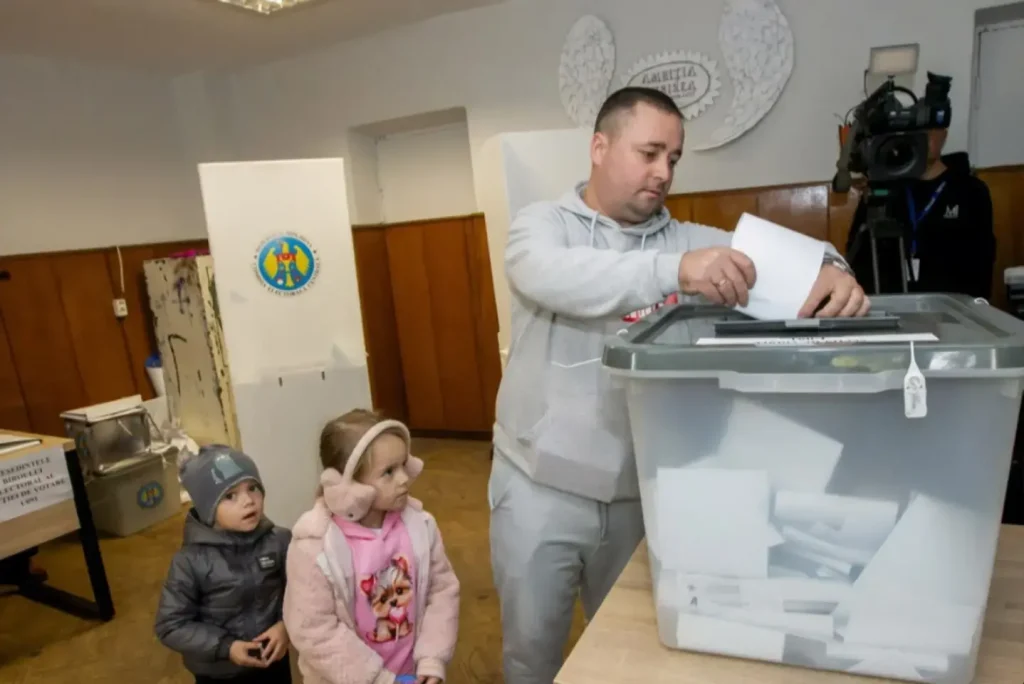
In conclusion, the 2025 parliamentary elections were not decided in Western chancelleries, as Lavrov claims, but in the voting booths of Moldova's villages and cities. The result is proof of political maturity: citizens have understood that "friendship" with Moscow means isolation and poverty, while the European path, although difficult, is the only guarantee of peace and freedom. Russia's attempts to delegitimize this vote are merely the echoes of an influence that is irreversibly setting in Chisinau.