Justinian I – the emperor who tried to restore Rome’s lost glory. The legacy of Byzantium’s boldest ruler
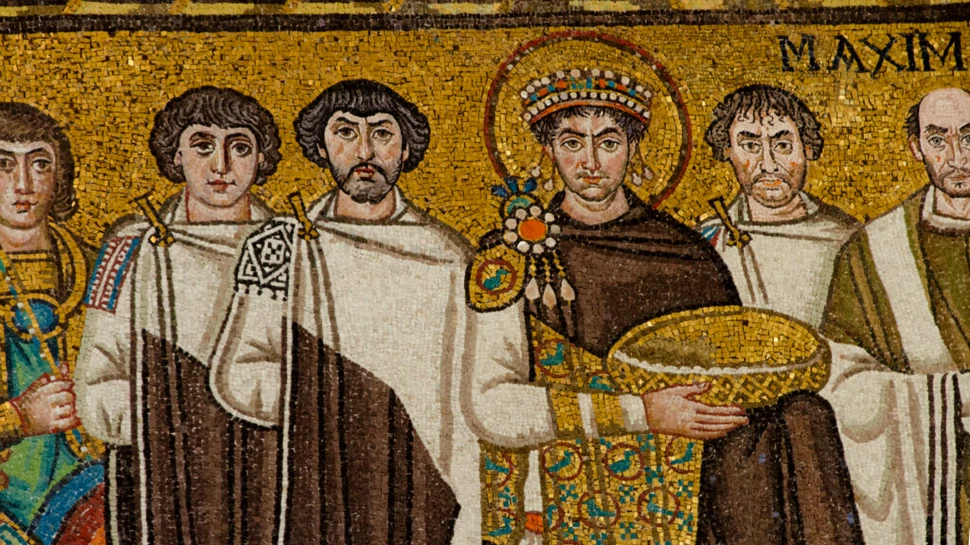
On November 14, 565, the Byzantine Empire lost one of its most remarkable rulers: Justinian I, the emperor who dreamt of rebuilding the grandeur of ancient Rome. Born in 482 in the village of Tauresium to a Latin-speaking peasant family, Justinian rose to power in 527 with the support of his uncle, Emperor Justin I.
Justinian envisioned a reunited Roman world — East and West bound together under a Christian imperial banner. Through the brilliant campaigns of his generals Belisarius and later Narses, he regained North Africa and Italy, restoring part of Rome’s lost prestige. Although these reconquests proved short-lived — the Lombards took Italy in 568 — his ambition defined an era.
His reign also witnessed intense crises, the most famous being the Nika revolt, the largest urban uprising in Constantinople’s history. At the peak of chaos, when escape seemed the only option, Empress Theodora — a former circus performer turned powerful political figure — convinced Justinian to stand and fight. Belisarius’ decisive intervention crushed the revolt and saved the empire.
Perhaps his most enduring contribution is the monumental Codification of Roman Law, begun in 529. The Corpus Juris Civilis reorganized centuries of legal tradition and became the foundation of modern European law.
November 14 is marked by other major historical events as well: the death of Leibniz (1716), the birth of Claude Monet (1840), the first BBC radio broadcast (1922), the restructuring of the USSR (1991), and the conclusion of debates on Romania’s Constitution the same year.
Justinian’s legacy remains that of a visionary emperor — a leader who sought to revive the Roman dream and, for a brief moment, succeeded in bringing its brilliance back to life.