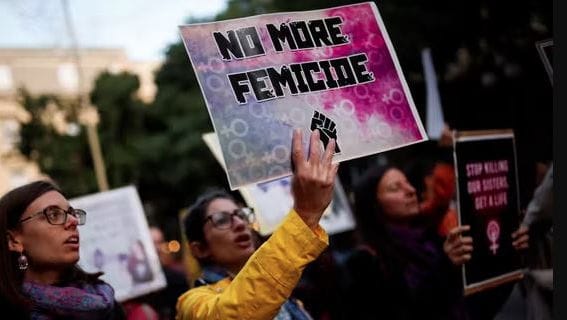
Italy Becomes First European Country to Introduce Life Imprisonment for Femicide
Italy has taken a landmark step in the fight against gender-based violence, becoming the first European nation to introduce femicide as a distinct criminal offence punishable by life imprisonment. The law, passed by the Italian Parliament with broad support, reflects the growing urgency to address violence against women across the continent.
According to United Nations data, around 83,000 women worldwide were killed last year, and every ten minutes another woman dies at the hands of a partner or family member. The alarming statistics have intensified calls for stronger legal protections.
Prime Minister Giorgia Meloni welcomed the law, stating:
“We must do much more, every day — to protect, to prevent, to support. We must build an Italy where no woman feels alone, unsafe or threatened. The freedom and dignity of women are a duty of the state and a responsibility of all.”
What the new law changes
Femicide is now legally defined as the murder of a woman motivated by gender — including domestic abuse, misogynistic violence, coercive control or jealousy. With this definition, Italian prosecutors can pursue the highest possible penalty without relying on aggravating circumstances.
Women’s rights groups have hailed the law as a “historic victory,” but emphasise that legislation must be accompanied by:
-
expanded shelters and counselling services,
-
rehabilitation programmes for offenders,
-
specialised training for law enforcement,
-
immediate protection measures for women at risk.
The situation in Moldova
In the Republic of Moldova, femicide was introduced as a criminal offence in mid-2025, but the maximum penalty remains up to 12 years in prison — far below Italy’s new standard.
Activists note that:
-
domestic violence remains widespread,
-
rural areas lack specialised services,
-
and many cases are under-reported or insufficiently investigated.
Italy’s move may shape future debates across Europe — including Moldova — regarding stronger punishment and improved protection mechanisms for women.