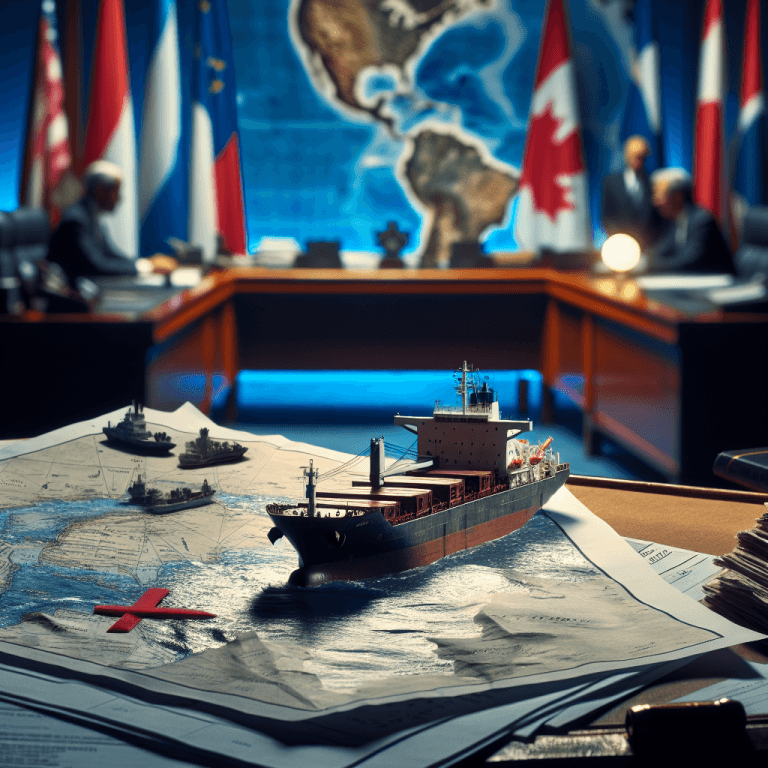
Russia's Strategic Maneuvers in the Arctic: A Look at Political and Economic Implications
Context & Background
The Arctic has long been a land of intrigue, with its icy landscapes concealing vast natural resources and new shipping routes that have become increasingly valuable due to climate change. Historically, the strategic importance of the Arctic has been underscored by the region's rich deposits of oil and natural gas, with estimates suggesting that nearly 22% of the world's undiscovered oil and natural gas reserves lie beneath its frigid waters. Following the fall of the Soviet Union, a number of Arctic nations, including Russia, Norway, and Canada, have actively pursued territorial claims, heightening tensions among these countries as they seek to secure their interests. The Arctic's geostrategic significance has been further emphasized by the melting ice in recent years, spurred by global warming, which has opened up previously unreachable areas for exploration and exploitation. This unfolding scenario not only highlights Russia's robust military presence but also its burgeoning ambitions to assert dominance over the Arctic region, redefining geopolitical relations on a global scale.
Incident Details
Official Reactions
Impact & Future Outlook
The long-term implications of Russia's actions in the Arctic cannot be overstated. As climate change continues to reshape the landscape, the region stands to become increasingly significant in global geopolitics, attracting investment and attention from multinational corporations seeking to exploit natural resources, such as oil, gas, and minerals. Analysts foresee a potential increase in arctic shipping routes that could significantly reduce travel time for global trade, thereby altering economic dynamics. However, increased military activity could instigate escalated tensions, with a potential arms race among Arctic nations poised to fortify their claims. Moreover, if diplomatic relations are not fostered, there might be significant risks of conflict, which could endanger not just regional stability but global energy security and environmental health. Data-driven scenarios suggest that without proactive governance and cooperation in the Arctic, the region’s transformation could lead to severe geopolitical conflicts, environmental degradation, and increased risks to indigenous livelihoods whose existence relies on the integrity of their natural surroundings. Thus, the future of the Arctic remains uncertain, hinging on the actions taken by global powers in the coming years.