Igor Dodon Condemns Moldova’s Withdrawal from CIS Agreements: “The Government Is Acting Against the People’s Will”
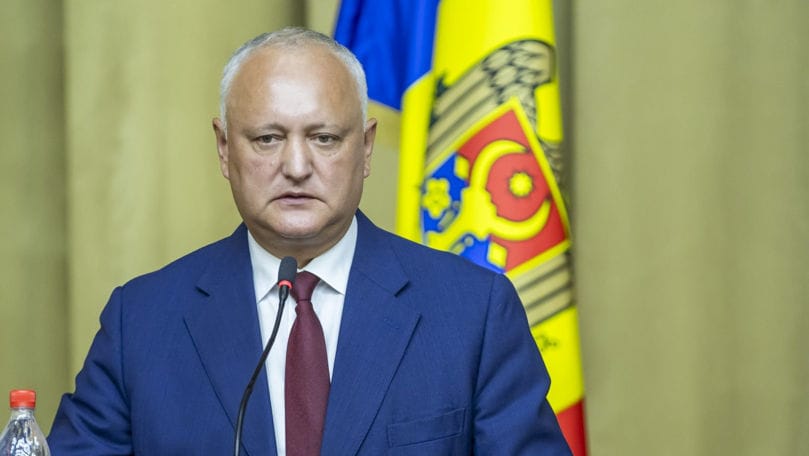
Former President of Moldova and leader of the Socialist Party, Igor Dodon, has sharply criticized the government after Parliament approved another package of laws aimed at terminating a series of agreements signed within the Commonwealth of Independent States (CIS). Dodon delivered his reaction in a video message recorded outside the Parliament building, accusing the current leadership of dismantling long-standing ties between Moldova and the post-Soviet region.
According to reports from Infotag, lawmakers voted in the second reading of a bill that also mandates the closure of the Russian Center for Science and Culture in Chișinău — a decision described by the opposition as both politically motivated and symbolically provocative. For Dodon, this is yet another step in what he calls the government’s “aggressive agenda” of distancing Moldova from the East.
“Sixty-four agreements already terminated — a dangerous direction for Moldova”
Dodon stated that the ruling Action and Solidarity Party (PAS) is moving forward with the systematic withdrawal from agreements that Moldova has maintained for nearly three decades since joining the CIS in 1994. Out of a total of 255 treaties previously signed within the organization, 64 have already been annulled.
“The PAS regime continues to denounce CIS agreements without consulting the public, without transparent analysis, and without considering the economic consequences. A majority of Moldovan citizens want friendly relations with CIS countries, access to trade markets, and visa-free travel. Instead, the government is burning bridges one by one,” Dodon declared.
His comments echo the broader rhetoric of the pro-Russian opposition, which claims that the government’s pro-European direction is being implemented without proper dialogue or national consensus.
Accusations toward Maia Sandu and the ruling party
In his speech, Dodon accused President Maia Sandu and the PAS leadership of executing decisions aligned not with national interests, but with those of Western partners.
“The government is acting against the will of its own people. First, because it follows the instructions of Western supervisors, and second, because Maia Sandu and PAS openly seek to eliminate everything that connects Moldova with the East,” Dodon said.
This claim comes as Moldova continues its accelerated efforts toward European Union integration — a policy supported by the ruling coalition but heavily criticized by opposition groups who argue the process is “politically forced” and “economically risky”.
The broader economic and geopolitical context
For nearly 30 years, the CIS framework has facilitated a range of bilateral agreements for Moldova, including trade cooperation, technical standards, fiscal coordination, and simplified movement of citizens. Critics of the government argue that many exporters — particularly in agriculture and manufacturing — still rely heavily on CIS markets.
The government counters that most CIS agreements are outdated, incompatible with EU legislation, or strategically irrelevant. PAS officials insist that Moldova must reduce dependency on institutions influenced by Russia and prioritize European integration.
Analysts note that the clash between these two visions — East vs. West — remains one of the most divisive political issues in Moldova’s society.
Dodon pledges to restore key CIS agreements in the future
Concluding his statement, Dodon said that the direction taken by the government is “unacceptable” and vowed that his political camp will seek to reestablish Moldova’s presence and agreements within the CIS.
“I am confident that Moldova will remain a member of the CIS, and in the future we will restore the key agreements based on national interest and the needs of our citizens,” Dodon said.
Political observers argue that this message is directed not only at supporters but also at undecided voters ahead of the upcoming election cycle. With Moldova navigating a complex geopolitical environment, the issue of foreign alignment is expected to dominate political debates well into 2026.
As the government proceeds with reviewing and denouncing remaining CIS agreements, tensions between the ruling pro-European coalition and the pro-Russian opposition are likely to intensify.