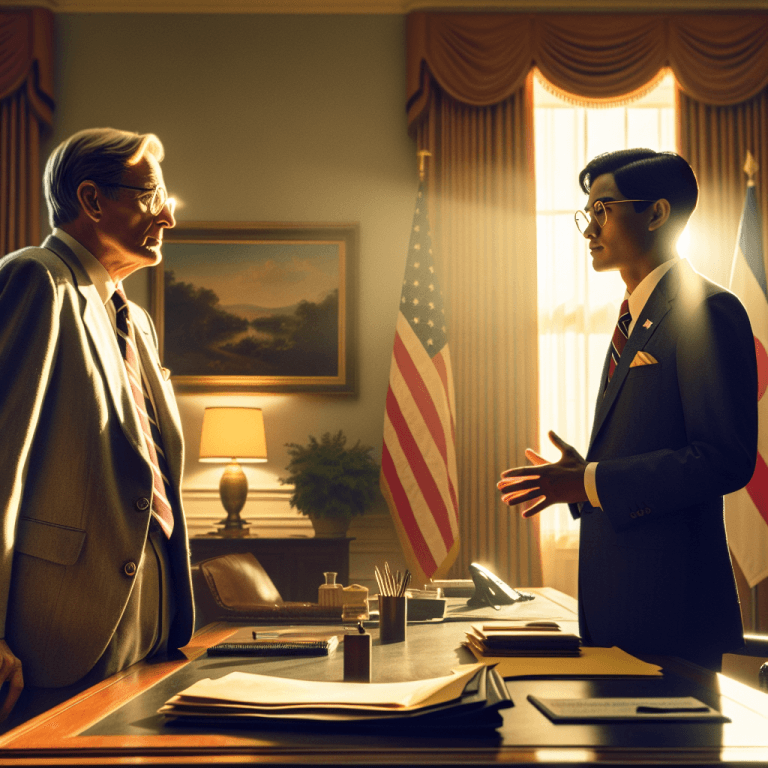
When the State Seeks to Silence Veterans: A Federal Judge Blocks Mark Kelly’s Demotion and Revives the Debate Over Retired Service Members’ Speech
A conflict that extends beyond the courtroom
The federal judge’s decision to enjoin the administration’s effort to downgrade Senator Mark Kelly’s retired rank after his public video urging service members to refuse unlawful orders is not merely a personal vindication for a former naval officer and astronaut. It constitutes a test case for democratic norms, the legal status of veterans, and the balance of powers in the United States. The ruling raises fundamental questions about how the state may use administrative power against individuals who have left active military service but remain public contributors to debates on national security and public policy.
Roots of a deeper crisis
This dispute grows out of a structural tension that has intensified in recent years: the politicization of military symbols, institutions and personnel. The video in question — featuring Kelly alongside other former service members and past intelligence officials who alleged the existence of illegal orders and urged troops to disobey them — was denounced by the former president as seditious and prompted calls for severe criminal sanctions. Subsequent criminal investigations faltered when a federal jury declined to sustain seditious-conspiracy charges. What remains is an administrative response that seeks to punish public speech through retirement benefits and rank adjustments, a shift from criminal prosecution to bureaucratic sanction.
What the judge decided and why it matters
U.S. District Judge Richard Leon blocked the Pentagon’s effort to reduce Kelly’s retired rank, finding that Secretary of Defense Pete Hegseth’s action constituted an unconstitutional reprisal for protected speech. Equally significant, Judge Leon rejected the government’s contention that disputes over this kind must be confined to military administrative processes rather than civil courts. The ruling affirms that the federal government cannot effectively quarantine the constitutional speech rights of retired service members simply because their comments touch on sensitive aspects of military discipline and command.
Judge Leon emphasized that, rather than diminishing the First Amendment liberties of retired servicemembers, defense officials should recognize the value of the wisdom and expertise veterans bring to public debate on military affairs, and that veterans deserve respect from their government.
The judge’s emphatic tone — rare in judicial writing — underscores the stakes. An administrative penalty that is disproportionate to its stated aim risks chilling the civic participation of a respected social group and narrowing the scope of public debate on matters of national significance.
UCMJ versus the Constitution: where is the line drawn?
The Uniform Code of Military Justice (UCMJ) imposes speech restrictions on active-duty personnel to preserve discipline, obedience and operational security. Those constraints are grounded in the unique demands of military service. The central legal question here is whether, and to what extent, such restrictions may be extended to retirees who no longer serve under the direct disciplinary authority of the armed forces but who continue to receive retirement pay and benefits associated with their rank.
Judge Leon’s decision articulates a decisive distinction: constitutional protections cannot be nullified merely because an individual formerly served in uniform. If the government can retroactively demote a veteran and condition retirement payments on post-service political expression, it would create a pathway for punitive political sanctions that is incompatible with First Amendment principles. In short, the state may regulate speech in the narrow context of active duty; it cannot use rank and pension mechanisms to police political speech after service has ended without running afoul of constitutional limits.
Economic leverage: the pension as an instrument of coercion
A reduction in retired rank is not a merely symbolic humiliation. It carries direct, long-term financial consequences through diminished retirement pay. The threat of manipulating a former officer’s pension to punish their public views would transform a social institution meant to honor service into a tool of coercion. Such practices would have a chilling effect: other retired service members might self-censor to avoid jeopardizing earned benefits, thereby reducing transparency and curtailing public debate about military policy, civilian oversight and national security.
Signs of institutional politicization
Secretary Hegseth’s action must also be read against a broader political context in which civilian leaders sometimes deploy state instruments to penalize political opponents. When the civilian leadership of a defense apparatus becomes an instrument of partisan pressure, that dynamic carries a double danger. First, it corrodes public trust in the armed forces’ commitment to political neutrality. Second, it weakens separation-of-powers norms by forcing courts, rather than political branches or administrative processes, to become the principal bulwark against politicized sanctions — a role that itself can be contested and politicized.
What follows legally and politically
Judge Leon’s preliminary injunction does not close the dispute. The government may appeal, and the case could proceed to higher courts and, ultimately, the Supreme Court. At issue will be competing principles: the executive branch’s authority to regulate the status and benefits of retired military beneficiaries versus the constitutional speech protections that survive the end of active service. Practically, the litigation could push institutions toward more robust administrative processes with greater procedural safeguards, designed to prevent arbitrary or politically motivated penalties. Legislative responses are also possible, including clearer statutory protections for retirees or restrictions on the use of pension-related sanctions.
Reputational harm with electoral implications
The Kelly case has an explicit political dimension: he is a sitting senator, a visible opponent of the former president and a public figure whose views influence electoral debates. The court’s message was clear: state tools cannot be weaponized to silence political actors, particularly when those actors raise lawful questions about the legality of military orders. In electoral terms, this litigation will serve as a barometer for institutional resilience against partisan pressures, and voters will watch how norms and rules governing political expression and state power are upheld or eroded.
The Warhial Perspective
Judge Leon’s ruling is more than a procedural remedy in an individual dispute: it reasserts a constitutional promise that veterans — individuals who bore arms and risked their lives for the state — cannot be silenced or economically punished for their political views once their active service has ended. If an administration continues to equate legitimate criticism with betrayal and employs bureaucratic instruments to retaliate, American democracy will pay a steep price: diminished trust in the apolitical character of the military and the creation of a precedent that deters former service members from contributing to public discourse.
The Warhial forecast anticipates two divergent paths. In a hopeful scenario, appellate review will strengthen executive limits and crystallize jurisprudence that protects the speech of retirees, foreclosing the use of pensions as a means of political discipline. In a less favorable outcome, higher courts might endorse an expanded administrative power that gradually erodes veterans’ political freedoms and chills debate on security matters. The onus will fall on citizens and legislators to monitor the use of state instruments, and on the judiciary to safeguard the balance between military discipline and civil liberties.