Deepening Waters: Examining the Effects of Climate Change on Global Maritime Trade and Security
Context & Background
Climate change has emerged as a defining global issue of the 21st century, reshaping not just environmental landscapes but also the socio-economic and political dynamics across the globe. The increase in global temperatures, attributed primarily to anthropogenic activities, has been a stark reality since the late 19th century, yet its effects have accelerated alarmingly over recent decades. Historical temperature anomalies have shown a consistent upward trend, culminating in significant climatic events that have wreaked havoc on traditional weather patterns, leading to extreme weather phenomena. This climate crisis has particularly profound implications for maritime trade, which is fundamentally linked to international economic systems. Roughly 90% of global trade is carried by sea, making the security and stability of maritime routes an urgent concern. As ice caps continue to melt and sea levels rise, crucial trade routes such as the Panama Canal and the Arctic passage face unprecedented challenges, potentially leading to increased shipping rates and altered global trade patterns.
Incident Details
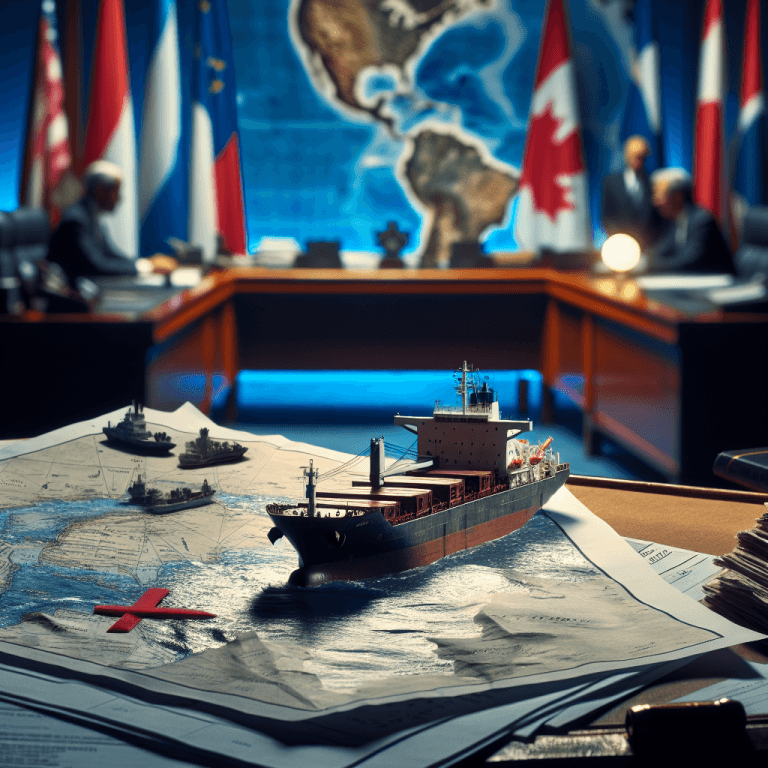
Recent incidents have underscored the acute vulnerabilities of global shipping networks to climate change. In 2021, a record-breaking heatwave in the Pacific Northwest, combined with wildfires, severely disrupted shipping operations along major trade routes and ports. The drought conditions affecting the Mississippi River in the U.S. further delayed shipments, leading to logistical nightmares for agricultural exports and imports. Moreover, the aging infrastructure of many port facilities, which were designed to operate under conditions that are rapidly becoming obsolete, poses another layer of risk. The International Maritime Organization (IMO) has documented a significant increase in the number of shipping delays due to adverse weather conditions over the past decade. These incidents paint a vivid picture of a shipping industry grappling with climate-induced turmoil, highlighting how extreme weather events can lead to cascading impacts that disrupt supply chains, inflate costs, and ultimately lead to shortages of goods worldwide. The melting of Arctic ice has also opened new shipping lanes, raising geopolitical tensions as countries rush to stake claims over resource-rich territories.
Official Reactions
Impact & Future Outlook
The long-term ramifications of climate change on maritime trade could reshape economic landscapes globally. As key ports struggle with rising sea levels, there is a pressing need for significant investments in flood defenses and resilient transport infrastructure. Economically, nations that rely heavily on maritime trade might find themselves at a distinct disadvantage if they fail to adapt quickly. Data-driven projections indicate that shipping costs could rise by as much as 30% within the next two decades if current trends continue. Moreover, the changing climate may shift trade routes dramatically, complicating established economic ties and requiring nations to navigate a landscape of emerging trade dynamics. The interplay of competition for new maritime routes, paired with heightened geopolitical tensions, will further complicate the future of global trade, prompting countries to rethink their alliances and strategies. As adaptation measures unfold, reliance on sustainable practices and international cooperation will be critical in mitigating risks and ensuring the stability of maritime trade amid turbulent environmental changes. Ultimately, navigating these uncharted waters will pose significant challenges, but also opportunities for innovation and collaboration in the face of one of humanity's greatest challenges.