Honduras Election in Deadlock: Asfura and Nasralla Locked in Razor-Thin Race Amid Tensions and US Influence
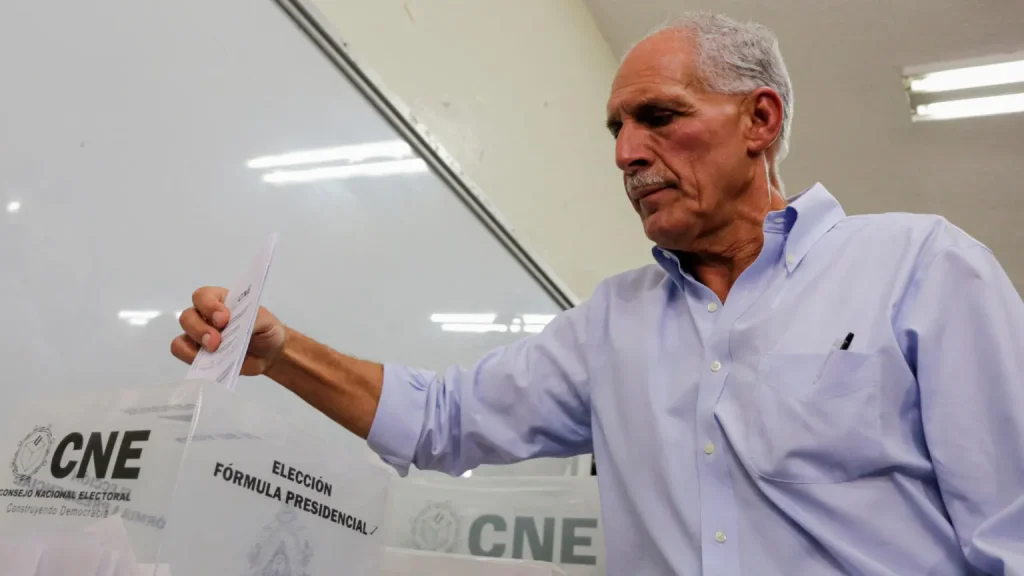
The general election in Honduras has become one of the closest and most politically charged contests in decades. Early results released by the National Electoral Council (CNE) show a razor-thin margin separating the two frontrunners: Nasry “Tito” Asfura of the conservative National Party and Salvador Nasralla of the centrist Liberal Party.
With nearly 56% of ballots counted, Asfura holds a lead of just 0.22 percentage points — fewer than 4,200 votes — over Nasralla. The CNE emphasized that the results are “preliminary and partial,” raising expectations that the lead could shift as remaining votes are tallied.
A Pivotal Moment for Honduras
For many Hondurans, this election represents an opportunity for change after years of corruption scandals, political instability, and economic hardship. President Xiomara Castro of the left-wing Libre party, who came to power promising bold reforms, was constitutionally barred from seeking re-election. Her chosen successor, Rixi Moncada, currently trails in third place with under 20%.
Voters seeking an alternative to the current administration have gravitated toward two opposing personalities: Salvador Nasralla, widely known for his television career and anti-corruption platform, and Nasry Asfura, a seasoned politician promising stability and a restoration of trust in governance.
Trump’s Controversial Involvement
The election took an unexpected turn when US President Donald Trump openly endorsed Asfura, writing on Truth Social that the US would be “very supportive” if Asfura won. He warned that “the United States will not throw good money after bad” if Honduras elects what he described as the “wrong leader.”
The comments sparked outrage among many Hondurans, who saw his statements as blatant foreign interference. Octavio Pineda, Minister of Infrastructure and Transport, publicly denounced Trump's posts as “electoral meddling.”
Trump further fueled controversy by promising to pardon former Honduran President Juan Orlando Hernández, who is currently serving a 45-year sentence in the US for drug trafficking. The announcement forced Asfura to distance himself from Hernández, stating he had “no ties” to the disgraced former leader.
Voices From the Ground
At a farmers' market in Tegucigalpa, citizens emphasized their frustration with entrenched corruption. Walnut seller Nicole Castillo urged voters to break free from party loyalty: “People need to face reality and choose change,” she said.
Nearby, cheese vendor Nolvy Oriales echoed the sentiment. For her, the priority is to combat corruption and bring fresh leadership. “These past years have been so hard,” she said. “We need someone new — someone who has not been in power before.”
Nasralla, despite briefly serving as vice-president alongside Castro, is widely viewed as a political outsider who can disrupt the system. Asfura, on the other hand, is trying to rehabilitate the image of the National Party, damaged by past scandals.
Fear of History Repeating Itself
The memory of the 2017 election still haunts Honduras. Following a disputed result, widespread protests and clashes with security forces resulted in more than 20 deaths. Many fear a repeat of that violence if this election remains tight and contested.
Some businesses have already boarded up their storefronts, anticipating unrest. Employees in urban centers have temporarily stayed home until the situation stabilizes.
Conclusion
As Honduras awaits the final count, the tension is palpable. Whoever wins will face an enormous challenge: uniting a polarized nation, restoring trust in institutions, curbing corruption, and protecting democratic stability. For millions of Hondurans, this election is not just about politics — it is about the urgent hope for a safer, more prosperous future.