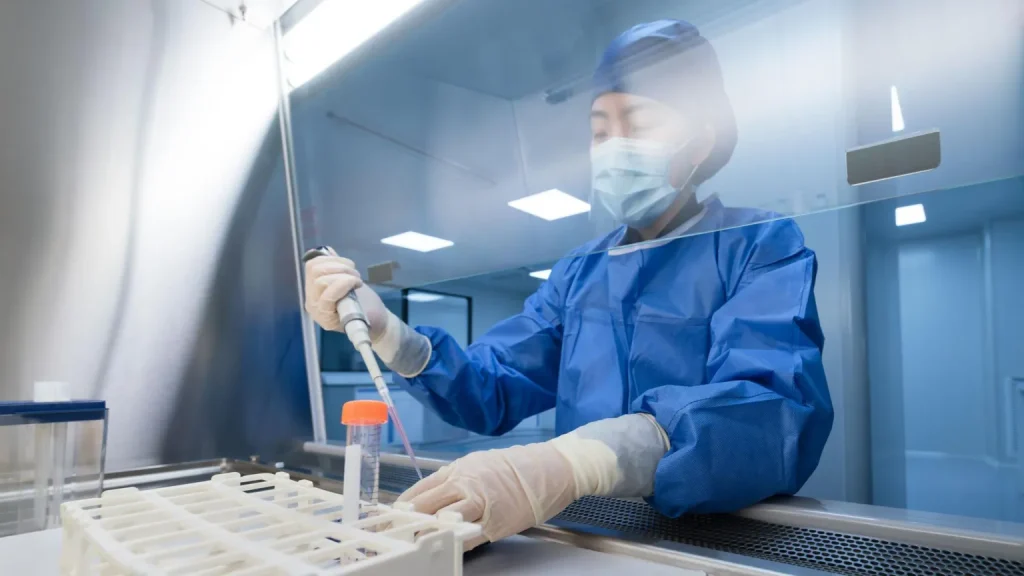
Medical Breakthrough: UK Scientists Fast-Track New Vaccine for Rare Ebola Strain
A developing health crisis is drawing the attention of the international medical community following an Ebola outbreak in the Democratic Republic of Congo (DRC). In response to this urgent threat, researchers at Oxford University are working against the clock to develop a new vaccine that could be ready for deployment within a matter of months. This rapid response highlights the critical role of scientific innovation in preventing regional outbreaks from becoming global pandemics.
The Current Landscape: A High-Risk Outbreak
The current outbreak is centered in the Democratic Republic of Congo and is driven by a rare species of the Ebola virus known as Bundibugyo. According to recent data from health authorities, the situation is severe:
-
Approximately 750 suspected cases have been identified.
-
At least 177 deaths have been directly linked to the virus.
-
The mortality rate is alarming, killing roughly one-third of those infected.
The World Health Organization (WHO) has recently upgraded the risk level of this outbreak from "high" to "very high" within the DRC and the surrounding region. While the international risk remains low, the WHO has officially declared the situation a public health emergency of international concern. However, they have stressed that this is not currently classified as a pandemic.
The Bundibugyo Challenge
While the medical community has successfully developed an effective vaccine for the more common Zaire species of Ebola, there is currently no proven, approved vaccine for the Bundibugyo strain. Historically, this specific strain has only been responsible for two previous major outbreaks: one in Uganda in 2007, and another in the DRC in 2012. Because it has not been seen in over a decade, developing a targeted vaccine had not been a primary focus until now.
Adapting the ChAdOx1 Technology
The Oxford research team is leveraging highly adaptable vaccine technology that proved successful during the Covid-19 pandemic. Known as ChAdOx1, this platform can be quickly modified to combat different infectious diseases.
-
How it works: The vaccine relies on a weakened version of a common cold virus (adenovirus) that typically infects chimpanzees. This virus has been genetically engineered so it is impossible for it to replicate or cause illness in humans.
-
The Mechanism: For this specific outbreak, scientists have loaded the modified virus with genetic code from the Bundibugyo Ebola species. Once administered, it acts as a delivery system, instructing human cells to recognize the Ebola virus and training the immune system to fight it off.
-
Safety Profilee: The vaccine cannot cause an Ebola infection or trigger its symptoms; its purpose is purely to safely build immunity.
Animal testing is already actively underway at Oxford facilities, serving as a vital prerequisite before human clinical trials can begin.
Production Pipeline and Vaccination Strategy
To guarantee rapid, large-scale manufacturing, Oxford University has partnered with the Serum Institute of India. Professor Lambe, the Calleva Head of Vaccine Immunology at the Oxford Vaccine Group, noted that once the institute receives the medical-grade starting material, they have the capacity to scale up production extremely fast.
The WHO anticipates that the experimental vaccine could be available for clinical trials within two to three months. However, the deployment strategy will differ drastically from the mass vaccination campaigns seen during Covid-19. Health officials will utilize a targeted approach known as ring vaccination. This method focuses solely on immunizing those at the highest risk of exposure, specifically:
-
Close contacts of confirmed Ebola patients.
-
Frontline healthcare workers treating the infected.
While global health authorities hope that standard protocols like quarantine and strict contact tracing will be enough to contain the outbreak, the rapid development of this new vaccine provides an essential safety net for global health security.
The core information in this article was adapted from an original report by James Gallagher for BBC News.