The Reality Behind the Alliance: What Truly Holds China and Russia Together?
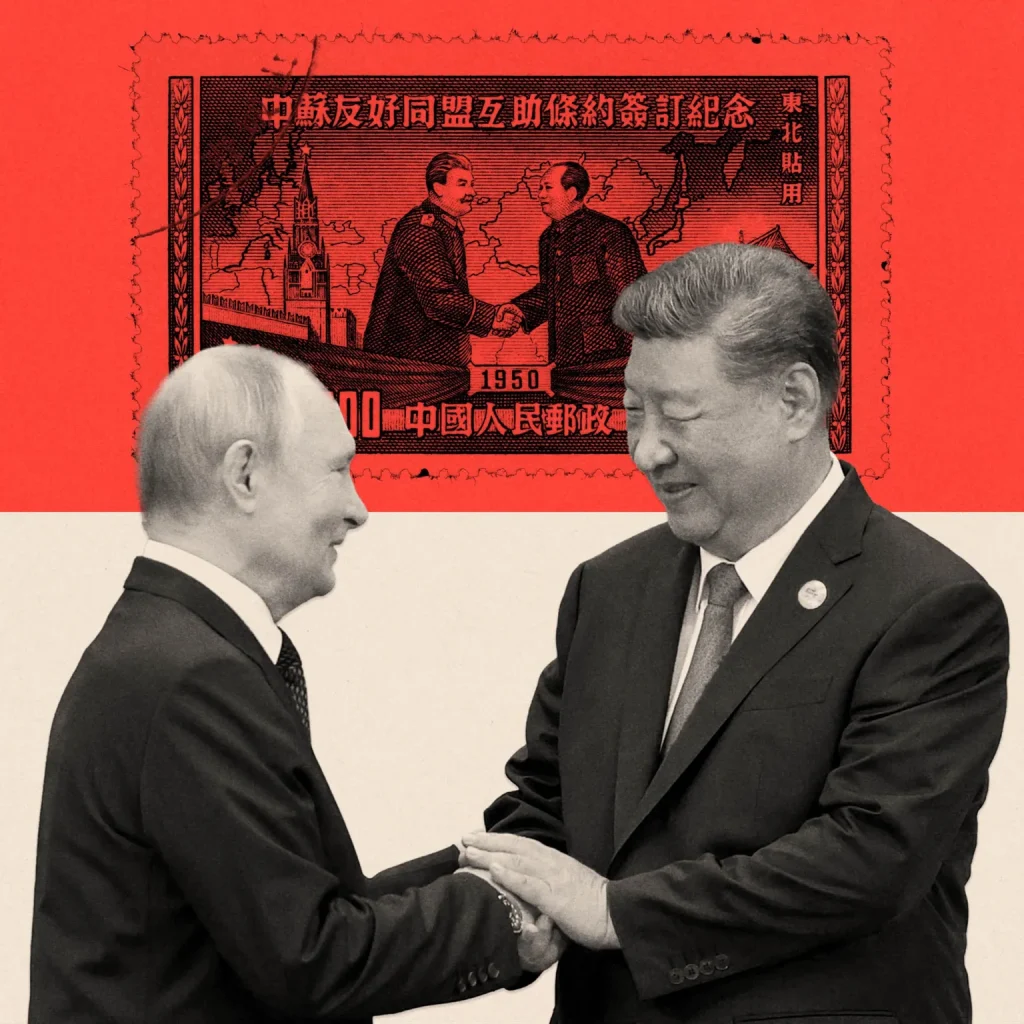
The relationship between Russia and China is frequently portrayed as an unbreakable friendship without limits. However, what lies beneath the surface of the official statements made by their leaders? According to an in-depth analysis published by BBC.com, the Sino-Russian partnership is far more complex, asymmetric, and pragmatic than it initially appears. Despite obvious differences, the two global powers are bound by vital shared interests that make a rupture highly unlikely in the foreseeable future.
A Relationship on China's Terms Experts argue that the current relationship is highly unequal. Alexander Gabuev, director of the Carnegie Russia Eurasia Center think tank, quoted by BBC.com, asserts that "Russia is fully in China's pocket, and China can dictate the terms". This asymmetry is most visible in the economic sector. China is Russia's largest trading partner by a wide margin, whereas Russia accounts for a mere 4% of China's international trade.
Years of Western sanctions imposed on Moscow have significantly accelerated this dependence. Since the full-scale invasion of Ukraine in 2022, Russia has increasingly relied on Chinese technology and components to sustain its economy and war machine. A Bloomberg report cited by the source reveals that Russia imports over 90% of its sanctioned technology directly from China.
Why Does Russia Accept the "Junior Partner" Role? Russia is acutely aware of this growing imbalance. Dmitry Trenin, president of the Russian International Affairs Council, recently emphasized the importance of maintaining an equal footing, stating that "Russia is a great power which cannot be a junior partner". However, Moscow's viable alternatives are severely limited.
China provides a massive market that is integral to Russia's economic survival, especially given its isolation from the West. Conversely, Beijing approaches this relationship with careful pragmatism. Marcin Kaczmarski, a lecturer at the University of Glasgow, explains to BBC.com that China's policy is one of "self-restraint". China understands that Russia, while economically vulnerable, remains a proud nation that could push back if it felt cornered. A notable example is Russia's decision to station nuclear weapons in Belarus shortly after Xi Jinping reportedly urged Putin not to use nuclear arms in Ukraine—a move widely seen as Moscow asserting its independence.
Strategic Advantages for Beijing For China, Russia is not just a liability but a crucial strategic asset. Beyond the niche military technologies that Russia can still offer, its vast energy resources are vital for China's long-term security. Advanced discussions regarding the Power of Siberia 2 pipeline, designed to deliver 50 billion cubic meters of Russian gas annually to China, represent a highly significant step. In an increasingly volatile world, securing domestic energy security is an absolute priority for Beijing.
Flexible Partners, Not Rigid Allies A key aspect highlighted by the BBC.com analysis is that Russia and China do not form a formal military alliance. Bobo Lo, a former Australian diplomat in Moscow, believes that this "flexible strategic partnership" provides resilience. Unlike strict alliances, neither country is strictly bound to follow the other's lead.
Furthermore, the two nations are united by their 4,300km shared border, their complementary economies, and their shared opposition to a US-led global order. Another significant binding factor is their mutual lack of criticism regarding internal issues, such as human rights, which creates what Gabuev describes as an "organic symbiotic relationship".
In conclusion, although the asymmetry is growing and their foreign policy approaches can diverge (with China being more cautious and pragmatic, and Russia more disruptive), the partnership remains robust. As the source concludes: "Both sides recognise that it is too important to fail, especially given there are no viable alternatives to continuing cooperation".