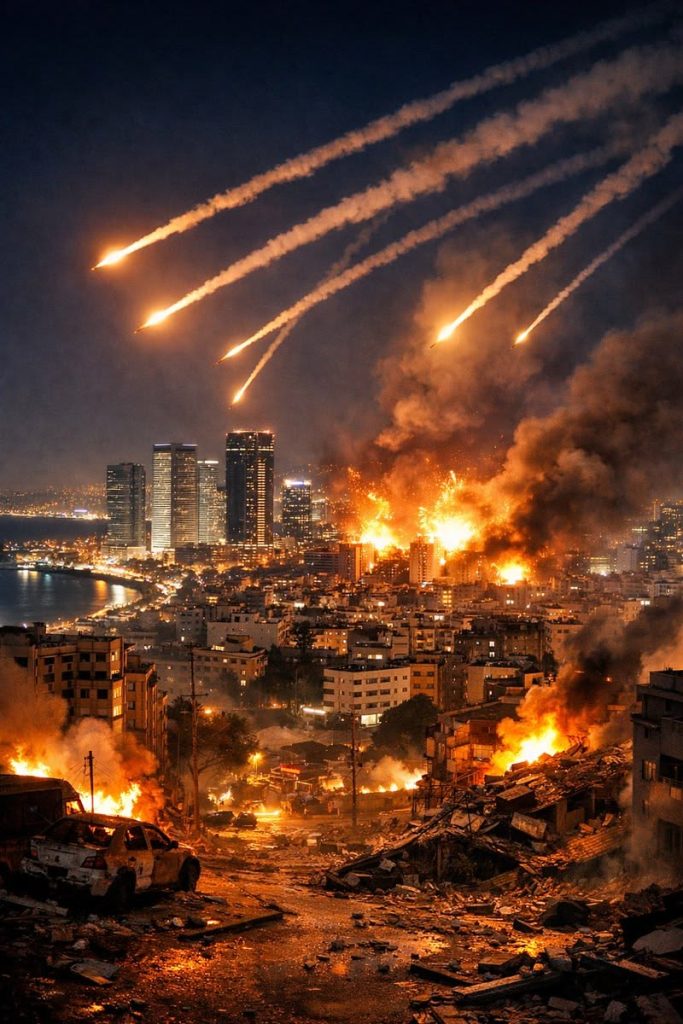
Breaking News: President Donald Trump Halts Planned Military Attack on Iran Following Gulf States' Intervention
Source: BBC.com
The Middle East finds itself at another critical crossroads, but tensions appear to have hit a temporary, tactical pause. In an unexpected diplomatic development, US President Donald Trump has officially announced that he is holding off on a massive military attack on Iran, which was originally planned for Tuesday. This pivotal decision comes amid intense diplomatic pressure and behind-the-scenes negotiations involving key regional allies.
The Crucial Intervention by Gulf States
According to reports published by BBC.com, the decision by the commander-in-chief was not made in isolation but was the direct result of urgent, last-minute diplomatic channels. In a detailed post on his social media platform, Truth Social, Donald Trump explained that the suspension of the strike order was made at the express request of Middle Eastern leaders. Specifically, he noted that the leaders of Qatar, Saudi Arabia, and the United Arab Emirates (UAE) had intervened, emphasizing that "serious negotiations are now taking place" which could lead to a peaceful resolution to the ongoing crisis.
These Gulf states, which share maritime borders with Iran and rely heavily on the stability of oil shipping routes, have a massive vested interest in preventing an all-out war in the region. A large-scale conflict would not only devastate the Middle East but would also send shockwaves through global economic and energy markets.
America's Red Line: No Nuclear Weapons
Although the imminent military strike has been halted for now, the conditions imposed by the US administration remain exceptionally strict. Trump stated in his post that he had been informed that a deal is taking shape that would be "very acceptable" to the United States. The cornerstone of this potential agreement was highlighted in all caps by the president: "NO NUCLEAR WEAPONS FOR IRAN!" This remains Washington's absolute, non-negotiable demand to guarantee long-term peace and security in the region.
However, the president made sure to issue a stark warning, making it abundantly clear that the military option has not been permanently removed from the table, merely paused. He explicitly warned that the United States military remains fully prepared to "go forward with a full, large scale assault of Iran, on a moment's notice" should the diplomatic talks fail to produce an acceptable deal.
Historical Context and Tehran's Silence
As of this writing, the government in Tehran has not publicly commented on Donald Trump's latest statement. Iran's silence is being analyzed closely by international observers, with some interpreting it as a sign that the backdoor negotiations are indeed at an advanced and highly sensitive stage.
This development follows a highly tense weekend during which Trump issued a stern warning to Tehran that the "clock is ticking," referring to the stalled talks aimed at bringing the hostilities to an end.
The current geopolitical climate must be viewed through the lens of recent military actions. As reported by BBC.com, Israeli and US forces initiated a campaign of massive air strikes targeting strategic locations in Iran starting on February 28. Subsequently, in a bid to facilitate a diplomatic pathway, a ceasefire was agreed upon in April. While this truce has largely been observed, it has been a fragile peace marred by occasional exchanges of fire. The world now watches closely to see if these renewed negotiations will bring lasting stability or if the region will once again be plunged into the chaos of war.