Iran Faces Unprecedented National Unrest Without Repeating 1979
A Dangerous Moment in Post-Revolutionary Iran's History
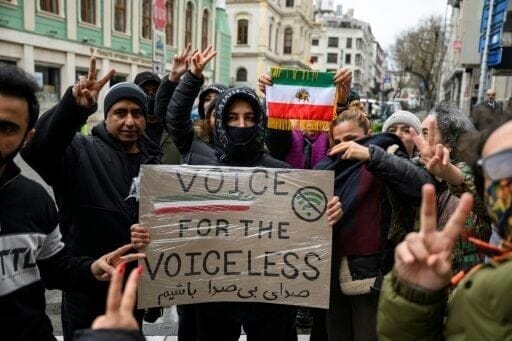
Iran is currently experiencing one of the most perilous moments in its post-revolutionary history. National protests have transitioned from sporadic to constant occurrences, with a new wave of unrest sweeping across the country, escalating violence. The true death toll remains unverified. These events have revived a familiar question: Is Iran heading toward a new 1979?
The comparison to 1979 is tempting. The images of mass mobilization and recurring protests evoke memories of the last months of the Shah’s reign. However, this comparison is ultimately misleading. The success of the 1979 revolution cannot be explained solely by mass mobilization. It was a convergence of coordinated opposition under Ayatollah Ruhollah Khomeini and the inability of the elites to effectively suppress dissent that ensured the revolution’s success.
Today, the situation is fundamentally different. Unlike the Shah, the leadership of Ayatollah Ali Khamenei is not marked by hesitation or indecision during crises. Since assuming the role of Supreme Leader in 1989, Khamenei has overseen a profound transformation of the Islamic Republic into a theocratic state focused more on repression than on societal consensus.
The coercive power of the Islamic Republic is not concentrated in a single institution, but is distributed among organizations that have redundant command chains. These forces are centered within the Islamic Revolutionary Guard Corps, Basij, police, intelligence services, and their associated networks.
In times of crisis, loyalists act preventively to thwart the spread of protests, perceiving unrest as a foreign-supported rebellion, which lowers internal barriers to violence. Thus, even larger and geographically broader protests than those of 1979 would not fundamentally challenge the regime.
What might change this balance is not merely protest but a direct shock to the regime's leadership structure. External intervention, particularly from the United States, could target senior political and security figures to disrupt elite coordination. Such an approach would create a genuine regime crisis only if it eliminated Khamenei.
In conclusion, a superficial comparison to 1979 could blind decision-makers, hindering their understanding of how the Islamic Republic operates today. This would only increase the likelihood that Iranians bear the costs of repression, escalation, and prolonged uncertainty.