International Court of Justice Begins Landmark Hearings on Rohingya Genocide Case Against Myanmar
Public Hearings at the International Court of Justice
Public hearings commenced on Monday at the International Court of Justice (ICJ) in a landmark case brought by Gambia against Myanmar, accusing it of violations of the Genocide Convention due to the military treatment of the Rohingya minority. The proceedings, held at the Peace Palace in The Hague, mark the beginning of the substantive phase of this case after years of preliminary legal arguments.
Over the next three weeks, ICJ judges will hear oral arguments from both parties, examine witnesses and experts, and consider whether Myanmar has violated its obligations under the Convention on the Prevention and Punishment of the Crime of Genocide, to which the country is a party. Opening the hearings, presiding judge Iwasawa Yuji presented a detailed schedule that includes two rounds of pleadings from Gambia and Myanmar, as well as closed sessions to hear testimony from witnesses consulted by the plaintiff state.
Speaking on behalf of Gambia, Attorney General and Minister of Justice Dawda Jallow stated before the Court that his country brought this case "after reviewing credible reports of the most brutal and vicious violations imaginable" committed against the Rohingya, a Muslim minority in Myanmar's Rakhine province. "In every way, this case is not about esoteric issues of international law," Jallow said. "It is about real people, real stories, and a real group of human beings."
A Long-Ongoing Case
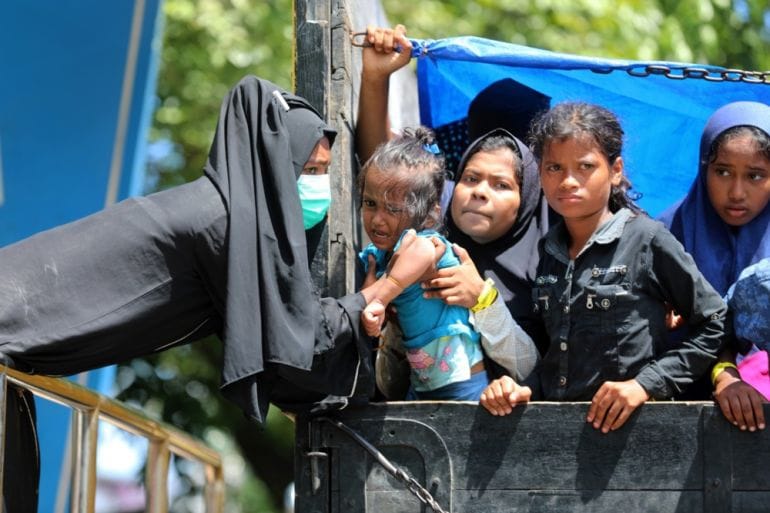
Gambia filed the request in November 2019, accusing Myanmar of violating the Genocide Convention through acts allegedly committed during the so-called "cleansing operations" carried out by Myanmar's military, known as the Tatmadaw. These operations escalated sharply in 2017, driving over 700,000 Rohingya to flee to Bangladesh, following murders, sexual violence, village burnings, and other widespread abuses. Zeid Ra’ad al-Hussein, former UN High Commissioner for Human Rights, described the situation as a "classic example of ethnic cleansing."
Nearly a million Rohingya remain living as refugees in camps in Bangladesh, while others are displaced or trapped within Myanmar under dire conditions. In January 2020, the Court unanimously ordered provisional measures, directing Myanmar to take all necessary steps to prevent genocidal acts against the Rohingya, preserve evidence, and report regularly to the Court on its compliance. Myanmar contested the Court's jurisdiction, but in July 2022, judges ruled that they were competent to hear the case.
In front of the judges, Jallow remarked that Myanmar remains caught in a "cycle of atrocities and impunity," noting that no one has been held accountable for the crimes against the Rohingya. He also highlighted the military coup in February 2021, which ousted the civilian government and plunged Myanmar back into national conflict.
“Accountability is imperative,” he stated, warning that impunity risks a recurrence of horrific crimes. Myanmar's arguments are expected to begin presenting later this week. The Court's final ruling, which could take months or longer after the hearings conclude, will be legally binding. The International Court of Justice is the principal judicial body of the United Nations, resolving legal disputes between states and providing advisory opinions on questions of international law.