Sudan Government Returns to Khartoum After Nearly Three Years
Sudanese Prime Minister Kamil Idris Announces Government's Return to Capital
The Prime Minister of Sudan, Kamil Idris, has announced the government's return to Khartoum after nearly three years of operating from the war-torn capital of Port Sudan. In the early days of the civil war between the Sudanese Armed Forces (SAF) and the paramilitary Rapid Support Forces (RSF) in April 2023, the army-aligned government fled the capital, which was quickly occupied by rival troops.
The government has followed a gradual process of returning to Khartoum after the army recaptured the city in March. "Today, we are returning, and the Government of Hope is coming back to the national capital," Idris told journalists in Khartoum, a city devastated by the war between SAF and RSF. "We promise better services, improved healthcare, the reconstruction of hospitals, the development of educational services... and the improvement of electricity, water, and sanitation services," he added.
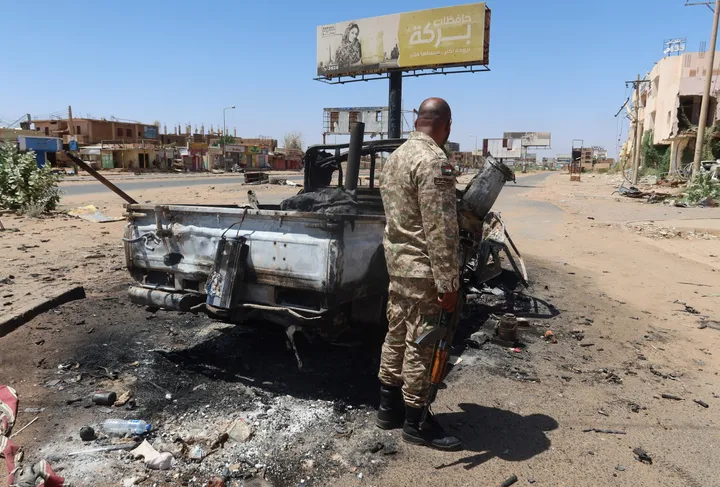
For nearly two years, the Sudanese capital—comprising the cities of Khartoum, Omdurman, and Khartoum North (Bahri)—has been an active battlefield. Entire neighborhoods were besieged, rival combatants fired artillery across the Nile, and millions have been displaced from the city. Between March and October, 1.2 million people returned to Khartoum, according to the United Nations. Many found a city with barely functioning services, destroyed homes, and neighborhoods dotted with graves dug by authorities that are now exhumed.
The war is estimated to have killed tens of thousands in the capital alone, but the total death toll remains unknown as many families have been forced to bury their dead in mass graves. According to the UN, rehabilitating the critical infrastructure of the capital is estimated to cost around $350 million. In recent months, the government has held several cabinet meetings in Khartoum and launched reconstruction efforts. The city has witnessed relative calm, although the RSF has conducted drone attacks, particularly on infrastructure.
Clashes are still occurring in other areas of the vast country. South of Khartoum, the RSF has advanced through the Kordofan region after ousting the army from its last stronghold in Darfur last year. The Sudanese army stated on Friday that it inflicted significant losses on the RSF following a series of aerial and ground operations carried out in the last week in the Darfur and Kordofan regions. In a statement, the army noted that its forces conducted strikes on RSF positions, destroying around 240 combat vehicles and killing hundreds of fighters.
The conflict has left 11 million people internally displaced and across borders, creating the world's largest migration and hunger crisis. Recently, the UN described El-Fasher in North Darfur as a "crime scene" after gaining access to the city—almost certainly abandoned for the first time since it was taken by the RSF, marked by mass atrocities in October.