European Union Approves Historic Trade Agreement with Mercosur After 25-Year Wait
Historic Agreement Between EU and Mercosur
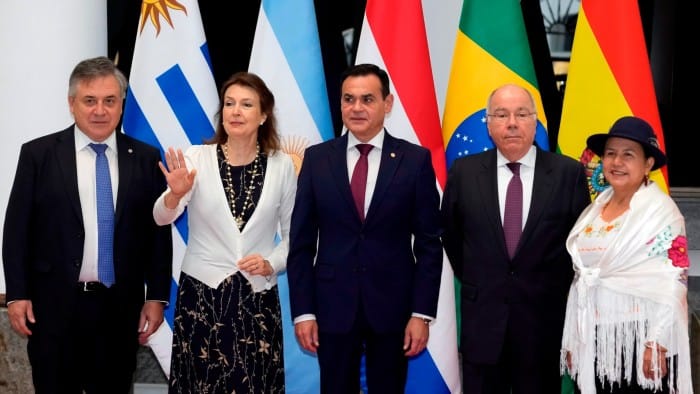
European Union ambassadors have approved a provisional deal for the largest trade agreement in the bloc’s history, facilitating free trade with the South American Mercosur group, which includes Argentina, Brazil, Paraguay, and Uruguay. This decision comes 25 years after the beginning of negotiations with Mercosur.
The European Commission, which finalized the negotiations a year ago, emphasizes the importance of this agreement in accessing new markets to offset losses caused by American tariffs and reduce dependence on China by securing access to critical minerals. Major member states, such as Germany and Spain, support the agreement.
However, opposition led by France, the EU's largest agricultural producer, warns that this will lead to increased imports of cheap food products, undermining local farmers. Farmers across the EU have protested in recent weeks, blocking highways in France and Belgium, while marches have taken place in Poland.
On the day of the vote, ambassadors from the 27 member states were asked to confirm their governments’ positions by voting. At least 15 countries, representing 65% of the total population of the bloc, voted in favor of the agreement, according to information provided by diplomats.
This will allow European Commission President Ursula von der Leyen to sign the agreement with Mercosur partners, possibly as early as next week. The agreement will also require approval from the European Parliament before it can take effect.
Trade in goods between the EU and Mercosur is projected to reach €111 billion in 2024, and this agreement would represent the largest tariff reduction, eliminating €4 billion in taxes on European exports.
The European Commission has implemented safety measures that could suspend imports of sensitive agricultural products to convince skeptics of the agreement. These measures include strengthening controls on pesticide residues and creating a crisis fund for farmers.
While Italy has accepted the agreement, France and Poland remain opposed. The French Agriculture Minister has pledged to fight for rejection of the agreement in the European Parliament, where the vote could be close.
Germany has welcomed the vote and described the agreement as an important signal, while in France, the opposition has filed motions of no confidence against President Emmanuel Macron’s government, accusing it of inaction in protecting farmers.