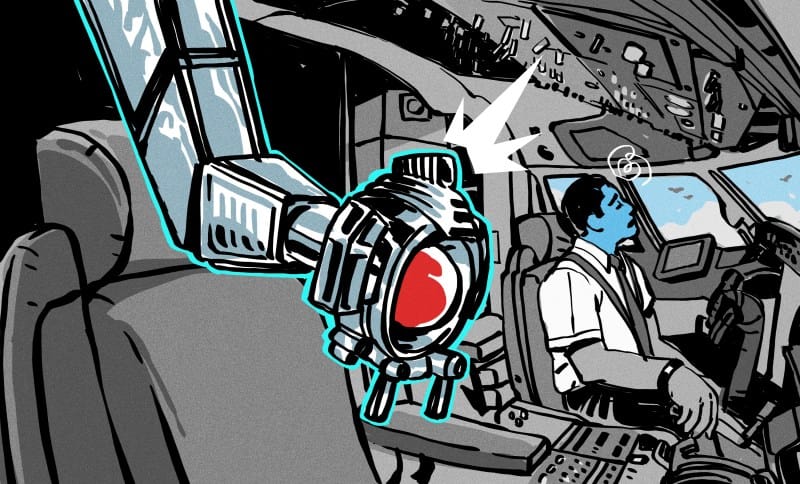
Advanced Autopilots Enhance Aircraft Safety When Humans Step Back
Aviation Safety Innovations
In movies, it’s a common trope that when pilots of an aircraft become incapacitated, a panicked crew member asks passengers if anyone knows how to fly a plane. While this may be a familiar scene, it does not reflect the reality of large commercial flights. In the case of smaller airplanes, there have been instances where passengers took over control, but the outcomes have not always been favorable. To provide more reliable support, a wide range of automated systems has been proposed and implemented.
Recently, the Garmin Emergency Autoland system was used for the first time in real conditions. The Beechcraft B200 Super King Air landed safely with two conscious pilots on board, who decided to let the Autoland system take control due to the “complexity” of the situation.
The Importance of Human Pilots
The human pilot has been an essential component of aviation throughout history for obvious reasons, such as avoiding uncontrolled landings or entering rough terrain or severe weather. This has changed with the advent of advanced sensors and landing assistance systems, which have allowed for the automation of processes previously considered difficult. The use of autopilots became indispensable as early as the 1930s, and technological progress has dramatically accelerated the automation of aviation.
On September 22, 1947, the first fully automated takeoff, flight, and landing was accomplished with a military aircraft, the C-54 Skymaster. This demonstrated that advanced technology can transform how we fly, leading to the question: why do we still need human pilots in this advanced navigation context?
Automation and Safety
Today, automation has become the norm in aviation, with companies like Airbus taking the lead. However, this transition to automation is not without incidents. One example is Air France Flight 447, where pilots incorrectly responded to speed information, leading to the aircraft's crash. This incident underscores the need for better pilot training or more advanced automation.
Recently, a new case of utilizing the Autoland system illustrated the effectiveness of this technology. The Beechcraft B200 experienced a cabin pressure loss, and despite the pilots being conscious, the automated mechanism intervened, ensuring a safe landing. This raises the question: what will the future of aviation look like regarding automation and the reduction of reliance on human intervention?
Systems like Autoland can save lives in general aviation, and as more automation is integrated into control towers, the future of flying may move towards a scenario where human pilots become a rarity.