Iran Faces Protests Amid Economic Crisis and Political Uncertainty
Protests Amid Uncertainty
The New Year protests in Iran occurred at the end of a year marked by war, economic tensions, and political uncertainties. In 2025, Israel launched a 12-day attack on Iran, assassinating high-ranking military leaders and targeting military and economic infrastructure. These attacks were followed by U.S. strikes on Iranian nuclear facilities in Fordow, Isfahan, and Natanz.
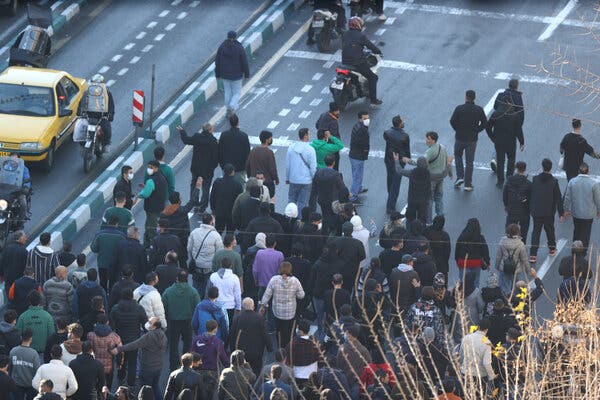
Protests erupted in the capital Tehran and other cities in central and southwestern Iran, starting in the last week of 2025 and continuing into the early days of 2026. Over the years, Iranian society has witnessed thousands of demonstrations, with reasons ranging from restrictions on social and political freedoms to the deterioration of economic conditions.
Economic Factors Behind Public Discontent
The late-year protests were fueled by a strike of bazaar merchants protesting against the sharp decline in purchasing power. This decline was driven by rising inflation and the collapse of the Iranian rial, which lost approximately 50% of its value. The unemployment rate reached 7.5%.
Economic grievances are not new in Iran. In 2008, a rise in value-added tax sparked protests in the bazaar, forcing President Mahmoud Ahmadinejad's government to retract the measure. Over time, economic demands have correlated with desires for social freedom, including opposition to mandatory hijab laws.
Governance Responsibilities and Sanctions
As demonstrations spread, the question of the role of sanctions and governance resurfaced. Iran’s economy has faced unresolved structural issues for years, with revolutionary ideological priorities overshadowing the development of a resilient state economy.
Economic partnerships with China and Russia have not brought stability, while Syria's accumulated debt to Iran has generated tensions. Iranian leaders, including Ali Khamenei, have acknowledged that the responsibility for the country’s economic situation cannot solely be attributed to sanctions.
Competing Narratives and Future Risks
Currently, the Iranian leadership is proposing two distinct narratives to explain the protests. The first focuses on governance failures, while the second, promoted by the security establishment, suggests that external actors provoke unrest and target the regime. This divergence creates confusion within state institutions, complicating responses to social tensions.
Amid the potential for a military attack from Israel, the Iranian regime is under pressure to respond differently if it wishes to ensure its survival. An escalation of the conflict could lead to a regime change in Iran given the current context.