Trump's Actions in Venezuela Could Set Global Precedents for Authoritarian Regimes
Trump's Actions in Venezuela
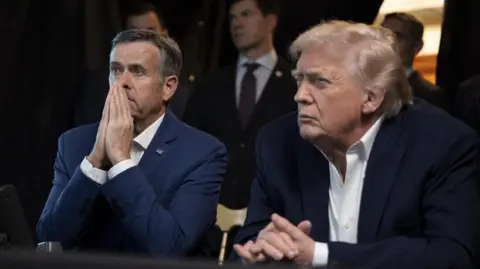
Donald Trump has showcased unprecedented power by arresting Venezuelan leader Nicolás Maduro, backed by the military strength of the United States. During an extraordinary press conference at his Florida residence, Mar-a-Lago, Trump announced that the U.S. will "control" Venezuela until a safe and fair transition occurs.
U.S. Secretary of State Marco Rubio engaged in discussions with Venezuelan Vice President Delcy Rodríguez, who stated, "we will do whatever it takes..." Trump emphasized that the U.S. is unafraid of troop deployment, but the lingering question remains: can he effectively lead Venezuela from afar?
The ramifications of U.S. actions in Venezuela could significantly impact influence in Latin America. According to research organizations like the International Crisis Group, Maduro's downfall could lead to violence and instability. Past U.S. military interventions in countries such as Iraq and Afghanistan have resulted in chaos.
Trump has attempted to revive the Monroe Doctrine, asserting that "American dominance in the Western hemisphere will no longer be contested," also mentioning other countries in the region like Mexico and Cuba.
Recent actions highlight Trump's desire to control the mineral resources of other nations, raising concerns about future international interventions.
Critics of U.S. actions argue that this represents a serious violation of international law, with effects that could be felt not only in Venezuela, but also globally, increasing risks of political instability in other regions.