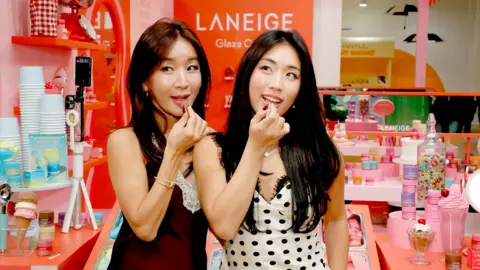
K-beauty Transforms From Social Media Trend to Economic Powerhouse
Korean Cosmetic Industry in Full Expansion
K-beauty, or Korean beauty, has rapidly evolved from a viral trend on social media to a robust economic industry. A remarkable example is the snail mucin serum, which has captivated skincare routines worldwide. This formula has enabled the Korean brand CosRX to become global, now owned by Amorepacific, the largest cosmetics company in South Korea.
The domestic market of cosmetics in South Korea is projected to be valued at around $13 billion in 2024, with the trend of international expansion continuing. K-beauty brands have started to fill entire shelves in global retailers, including Sephora and Walmart, becoming increasingly popular among consumers worldwide, particularly due to Hallyu, the Korean cultural phenomenon.
The Impact of Social Media
Social media plays a critical role in spreading K-beauty products, and influencers have significantly contributed to this success. With millions of followers on platforms like TikTok and Instagram, they promote K-beauty products by discussing ingredients, usage tutorials, and innovative trends like "glass skin" and sheet masks.
However, expertise in the effects of beauty ideals on young people is a growing concern. Addressing this reality, Kim Seung-hwan, CEO of Amorepacific, noted that excessive use of social platforms can lead to anxiety and uncontrolled spending.
Innovation and Adaptability
At the core of K-beauty's success is constant innovation, with new formulations frequently launched that spark online obsessions. Korean brands are known for their flexibility in quickly adapting to consumer demands. In a highly competitive business environment, many small and large brands collaborate with ODM manufacturers to rapidly implement new ideas.
The cosmetics industry in South Korea recorded a 15% increase in exports in the first half of 2025, with strong sales in the US and European markets, placing it on track to exceed $10 billion annually in cosmetic product exports.
Challenges and Perspectives
As K-beauty gains ground, competition intensifies, and consumers become more selective regarding ingredient transparency and product efficacy. Many brands are beginning to focus on the transparency of ingredients, encouraging consumers to be more informed and seek products based on natural characteristics rather than celebrity endorsements.
As industry leaders assert, K-beauty was initially a viral trend, but now it stands as an economic force. With government support and rising demand, the future of K-beauty looks bright in the global market.